
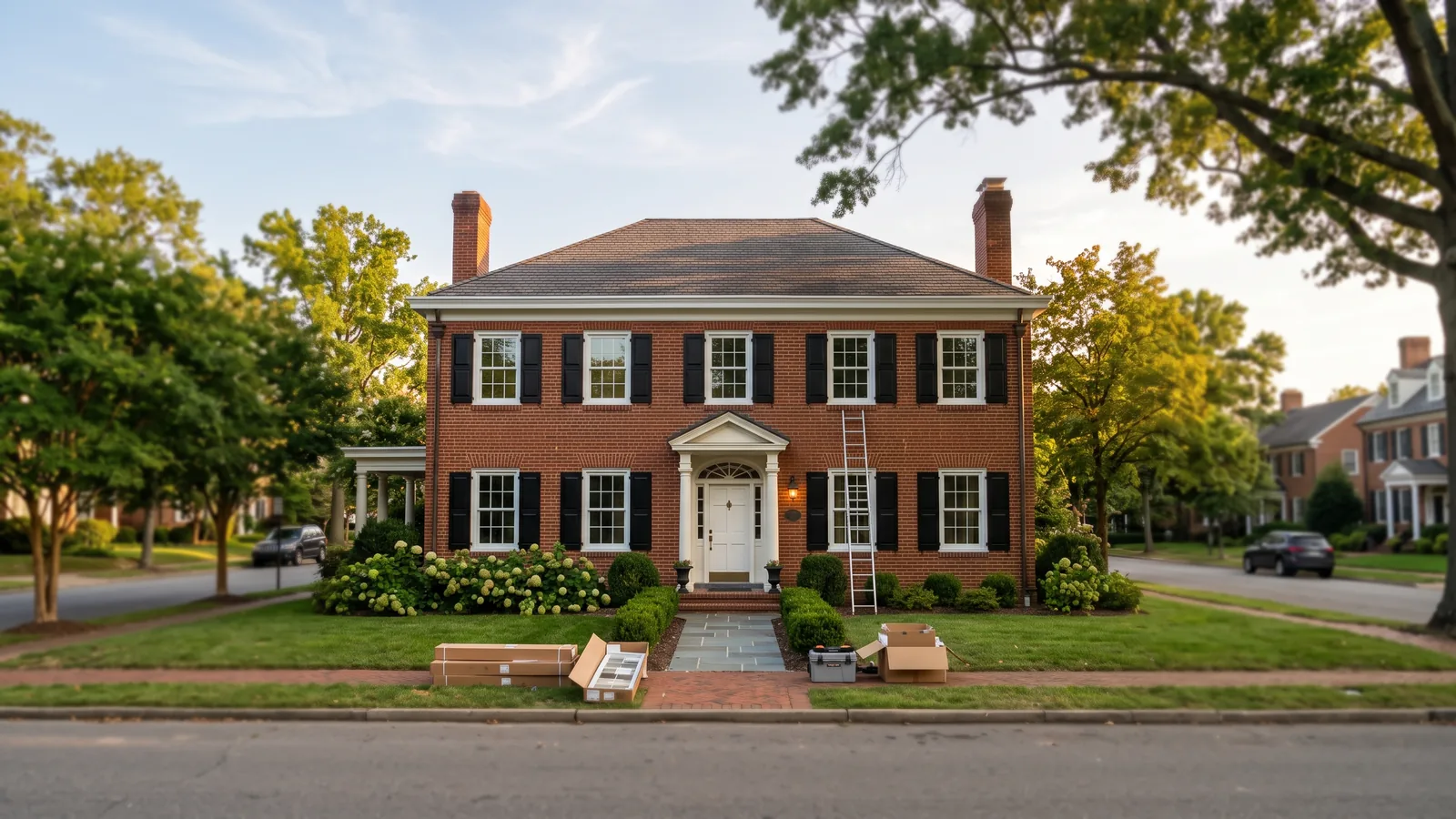
Wood Window Restoration Work, Sash by Sash
The National Park Service's guide to repairing historic wooden windows sorts the work into three levels: routine maintenance, stabilizing decayed wood, and splicing or replacing parts. Its point is that even badly damaged windows can be repaired with simple processes. These are the jobs inside a typical restoration.
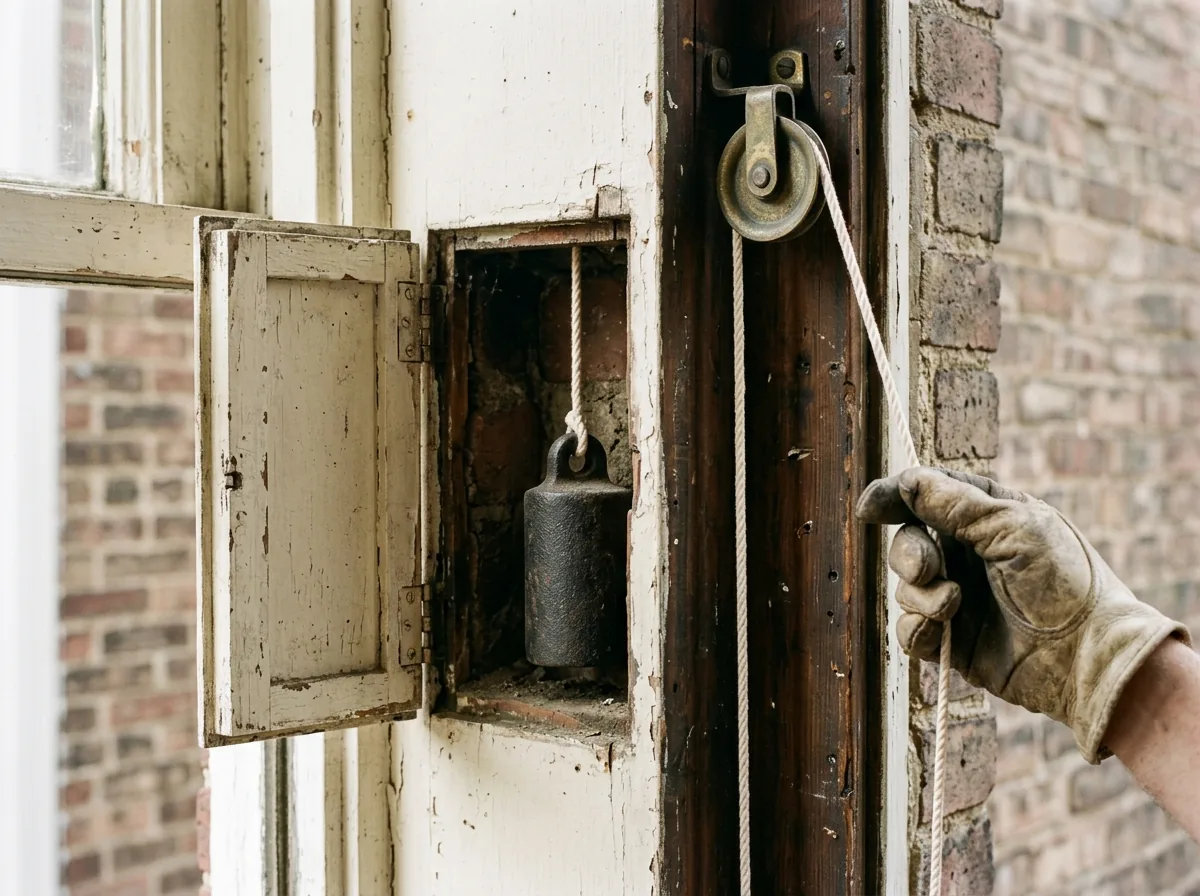
Rope-and-Pulley Sash Weights and Cords
Old double-hungs hang each sash from cords that run over a pulley to an iron weight hidden in the wall. When a cord snaps, the sash slams or has to be propped up. The fix is new rope cord or chain, threaded through the pulley and tied off to the weight. The pocket is usually reached through a small access door cut into the jamb near the sill; where there isn't one, the interior trim comes off. While the sash is out, the old cords are pinned or knotted so they don't drop into the pocket.
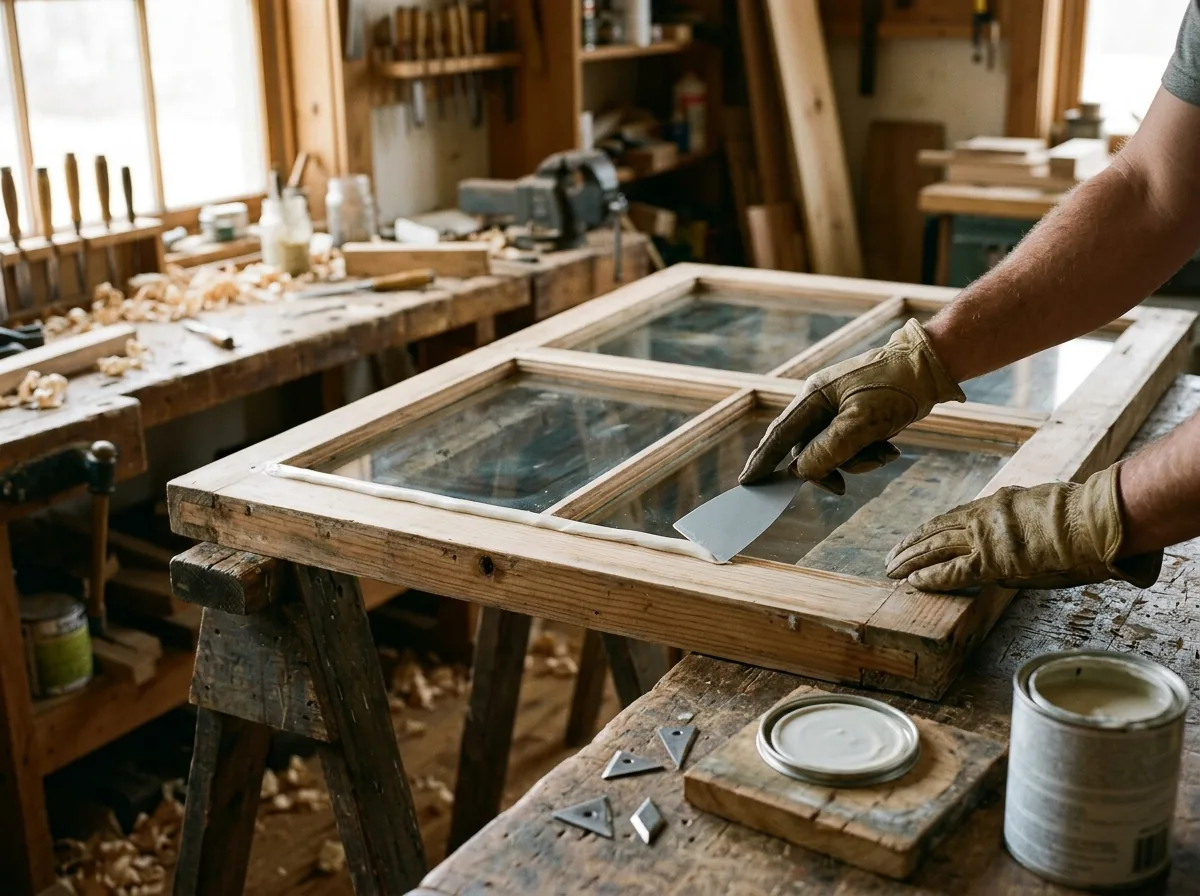
Reglazing With Glazing Putty
Cracked or missing putty lets rain soak the wood at the sash joints. Reglazing means cutting out the old putty, pulling the glazing points, lifting the glass, then laying a fresh bed of putty, pressing the pane back, setting new points and beveling a final bead. NPS advises waiting for a skin to form on the putty, usually two or three days, before painting, and lapping the exterior paint slightly onto the glass to seal it.
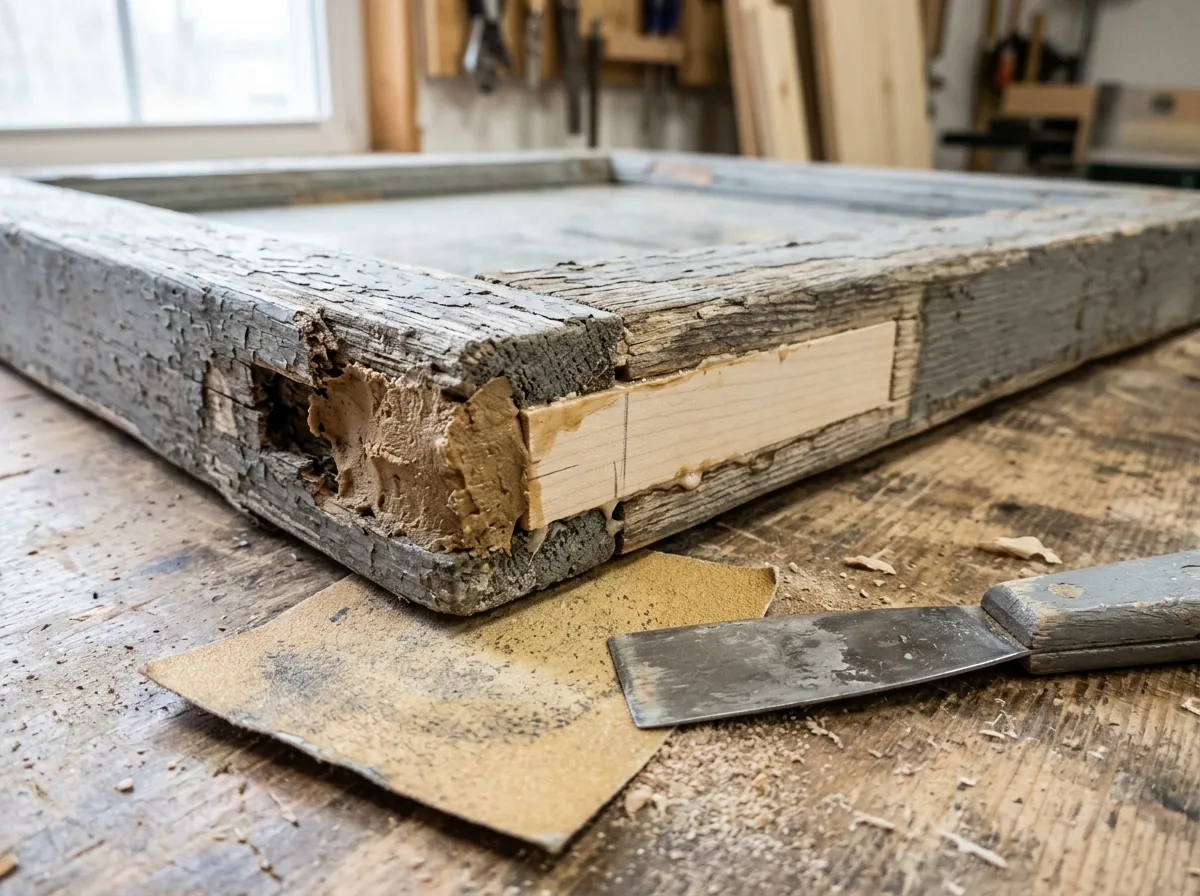
Epoxy Consolidant and Wood Dutchmen
Partly decayed wood doesn't have to come out. A liquid epoxy consolidant soaks into soft fibers and hardens them, then a semi-rigid epoxy filler rebuilds the missing shape, sanded and painted. NPS calls epoxies some of the most durable wood repair materials available. Where rot goes too deep, a carpenter cuts out the bad section and glues in a matching piece of new wood, called a dutchman, or has a mill copy a whole rail or muntin.
Lead-Safe Paint Removal
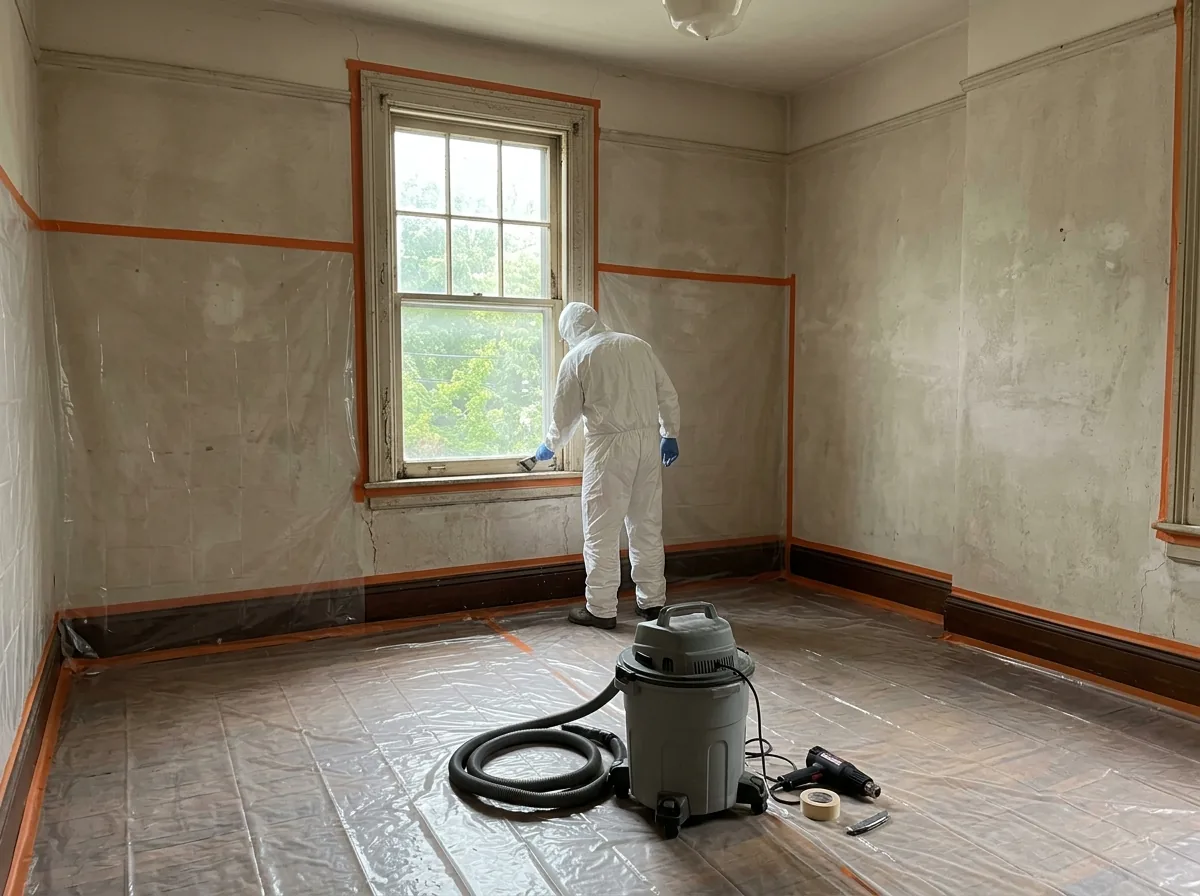
EPA's Renovation, Repair and Painting rule requires anyone paid to disturb paint in a home built before 1978 to be certified, with trained workers. The small-job exemption never applies to window replacement. Other window work is covered once it disturbs more than six square feet of paint per room inside or 20 square feet outside. Under 40 CFR 745.85, the work area inside gets taped-down plastic at least 6 feet out from the surfaces being worked, and outside the ground cover reaches 10 feet. Torching paint is banned, power sanding needs a shroud with a HEPA vacuum, and heat guns must run below 1,100°F. Ask to see the firm's certificate before the first scrape. EPA also notes that about three-quarters of U.S. homes built before 1978 still contain some lead paint, and window sills are a named friction hazard.
Keeping Old Cylinder Glass
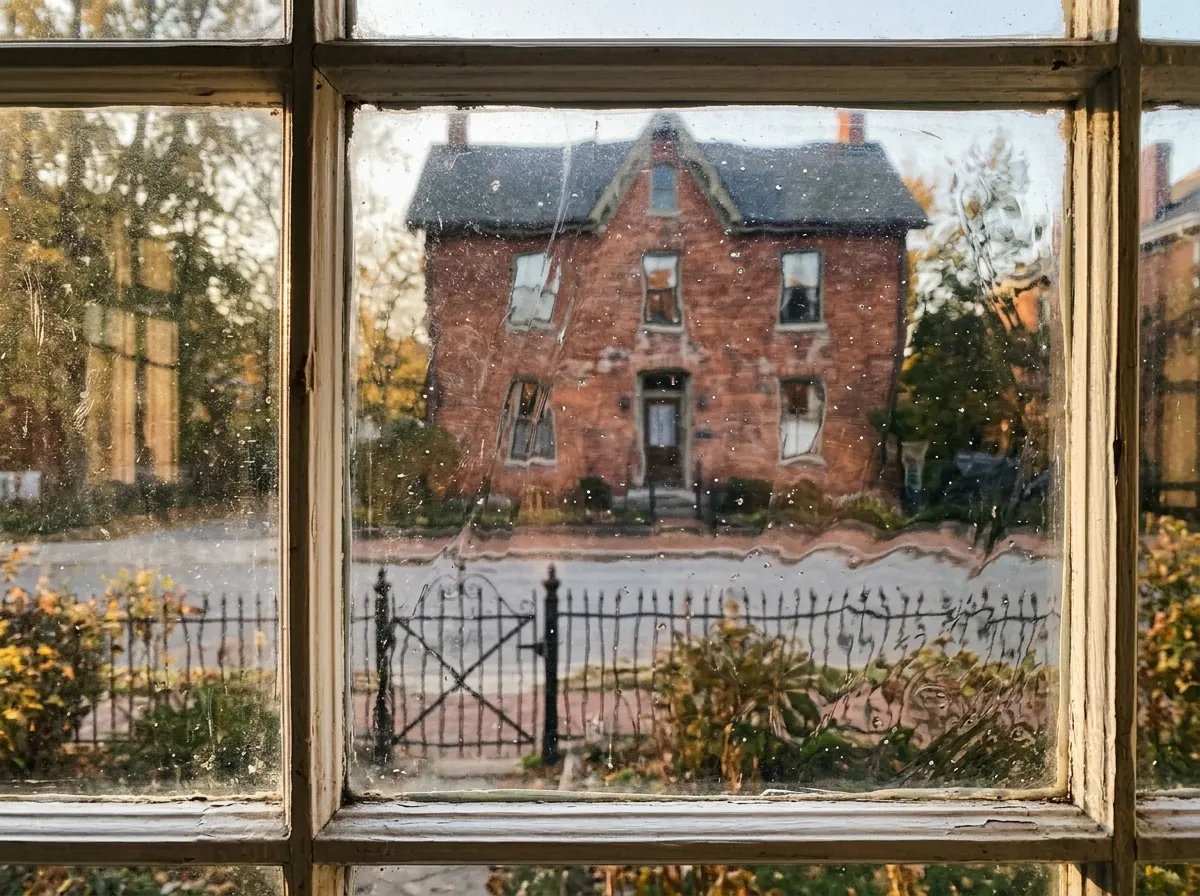
The faint waves and seeds in old panes are part of what the Commission of Architectural Review asks owners to keep, since its guidelines want replacement glazing to match the reflective quality of the original. NPS suggests softening hard putty with heat and soaking panes in linseed oil to loosen what's left on the glass, which lowers the risk of cracking an irreplaceable lite. Ask whether the installer keeps salvaged old glass for any pane that does break.
Work in City Old and Historic Districts
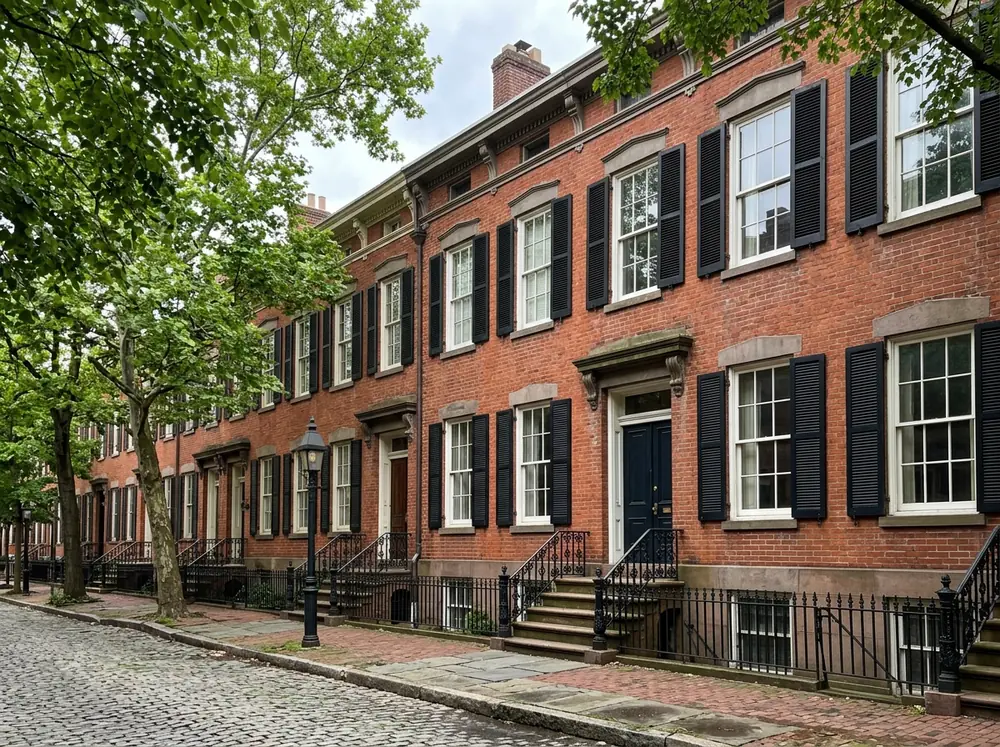
Richmond's Commission of Architectural Review reviews every exterior change in the City's Old and Historic Districts and issues Certificates of Appropriateness; the CAR page lists 44 districts. Its window guidelines say windows should be repaired, not replaced, and staff won't approve replacing historic wood or steel windows that can be repaired, or using vinyl. To replace at all, an owner has to document that the windows are beyond repair with photographs and a window assessment form, and staff suggest calling a restoration specialist before any window project. The Fan isn't on that list; its listing is state and federal, which carries no CAR review.
Why Richmond homeowners call Richmond Expert Windows
- A single independent window contractor gets your request, never a lead auction
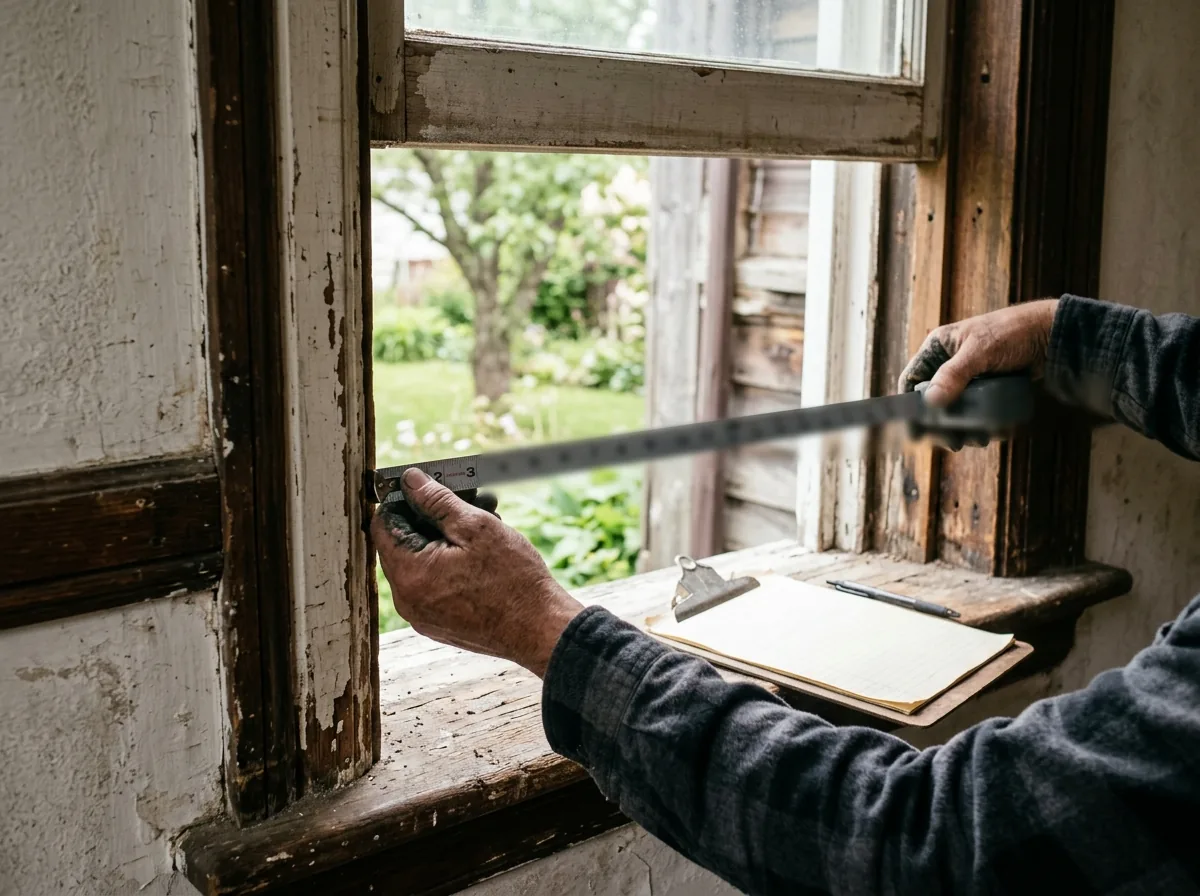
- Every opening is measured on site before a number is put on paper
- Ask for the quote in writing: unit series, glass package, install method
- Homeowners pay nothing for the referral or the visit
Wood Window Restoration Steps and Timing
NPS lays out the routine restoration of a sound double-hung in five steps, with times from a test job:
- 1
Strip loose paint
Inside and out, enough to free the sash and show the original detail. - 2
Pull and repair the sash
Cut the paint seal, pry off the interior stop, then ease out the parting bead, which is thinner and breaks more easily. Paint, putty and glass removal took about an hour per sash. - 3
Repair the frame
Sill, jambs and pulleys are fixed while the sash is out. - 4
Weatherstrip and rehang
New cords, weatherstripping and reinstalling the sash, bead and stop took about an hour and a half; reglazing both sash, about an hour. - 5
Repaint
Putty and paint curing stretch the full job over several days, so other windows get worked on in the gaps.
Ask how the opening is closed while the sash is in the shop, and for how many nights.
Wood Window Restoration and Energy Use
A single-glazed wood window is not efficient on its own. The NPS brief, quoting 1977 ASHRAE data, gives single-glazed wood windows a U-value of 0.88 to 0.99, falling to 0.44 to 0.49 with a storm window added. By that same data, a double-glazed metal window without a thermal break comes in around 0.6. Those are old numbers, but in our view the direction still holds: weatherstripping, a tight sash lock and a good storm get a restored window a long way. The storm windows page covers the options, and the energy-efficient windows page has the code targets for new units.
Wood Window Restoration Quotes: What to Ask
Certification
The firm's EPA RRP certificate and how the work area will be contained.Scope per window
Which sashes get reglazed, which get epoxy, which need a dutchman or a milled part, priced window by window.Paperwork for review
In a City Old and Historic District, whether they'll help with photos and the assessment form CAR asks for.Tax credit fit
Virginia's historic rehabilitation tax credit can cover owner-occupied houses that follow the Secretary of the Interior's Standards; ask the Department of Historic Resources whether your window work qualifies before counting on it.
See Window Sash Replacement in Richmond, VA if a sash is past saving but the frame is not. See Window Sill Repair in Richmond, VA for rotted sills, brickmold and frame repair.