
Skylight Repair by Problem
Start with where the water or damage shows up and when. A drip during a storm, a stain on a dry January morning and a fogged pane are three different repairs.
Flashing and Step-Flashing Leaks
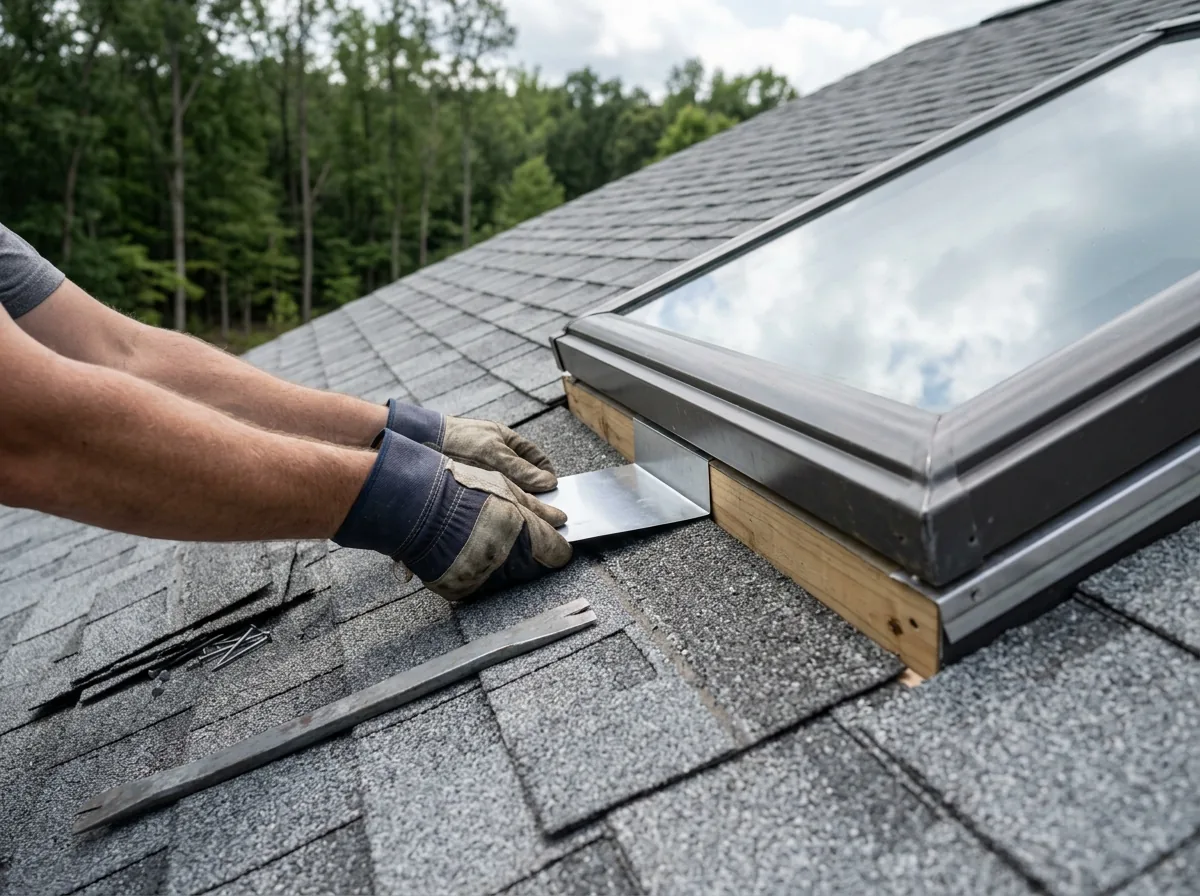
In our view, most skylight leaks start at the flashing, not the glass. Self-flashed and deck-mounted units use factory flanges and kits; curb-mounted units sit on a box of 2x4s or 2x6s on edge, flashed with a kit or with hand-bent metal, per InterNACHI's roof inspection course. It lists what a sound job looks like: shingles stopping an inch or so short above the skylight to leave a channel for water and melting snow, and flashing that runs at least 1/8 inch past the two uphill corners. It also warns that any sealant will eventually dry, shrink and crack. A fresh bead of roof caulk is a stopgap, then, not a repair. HomeGuide puts flashing repair at $150 to $500 nationally.
Cracked or Crazed Plastic Domes
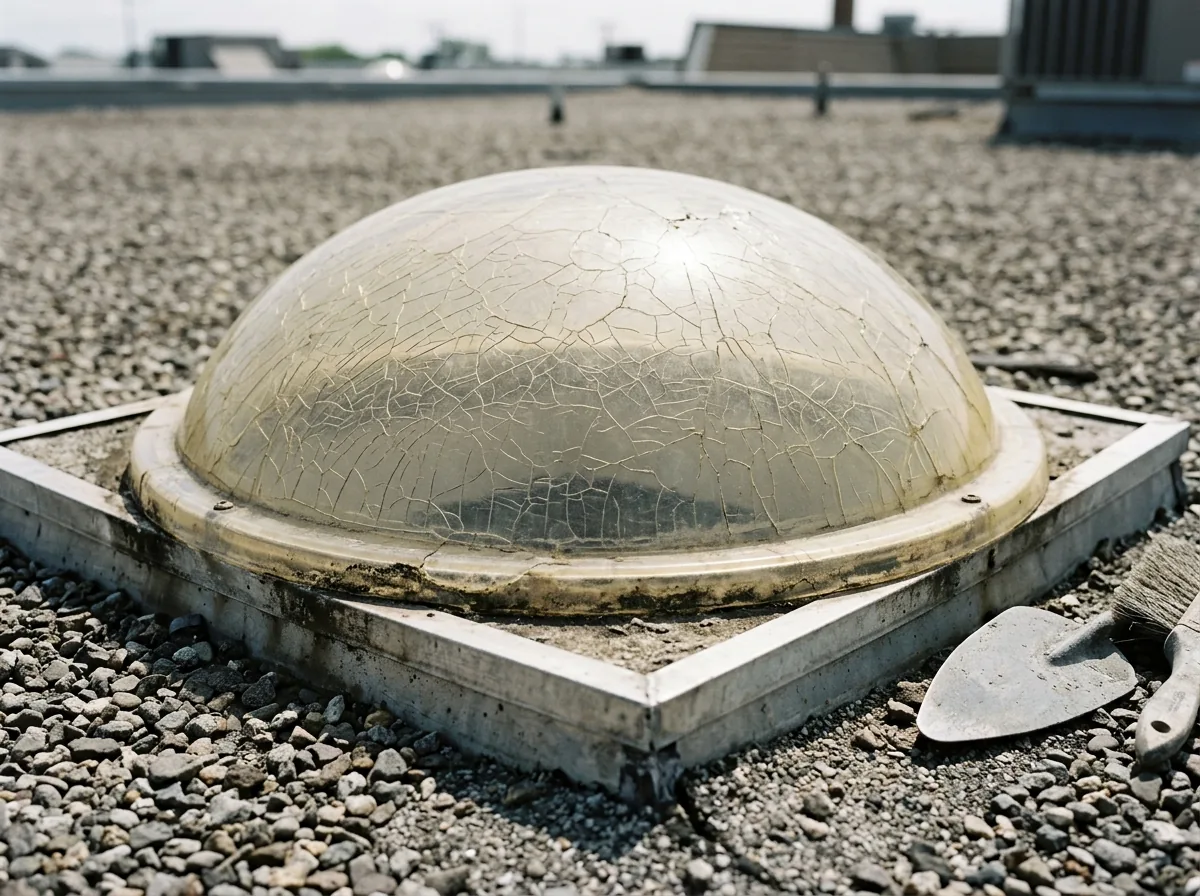
Bubble skylights from past decades have molded plastic domes, and years of sun can leave them crazed with hairline cracks, cloudy, or brittle enough to split. A cracked dome lets water straight in, so it moves to the top of the list. HomeGuide prices dome replacement at $350 to $900. If the curb itself is soft or the frame is cracked, the repair grows: HomeGuide notes contractors usually can't repair molded frames without replacing the whole skylight. Ask whether a new dome alone will seat on your curb, or whether the frame has to go too.
Fogged or Failed Skylight Glass
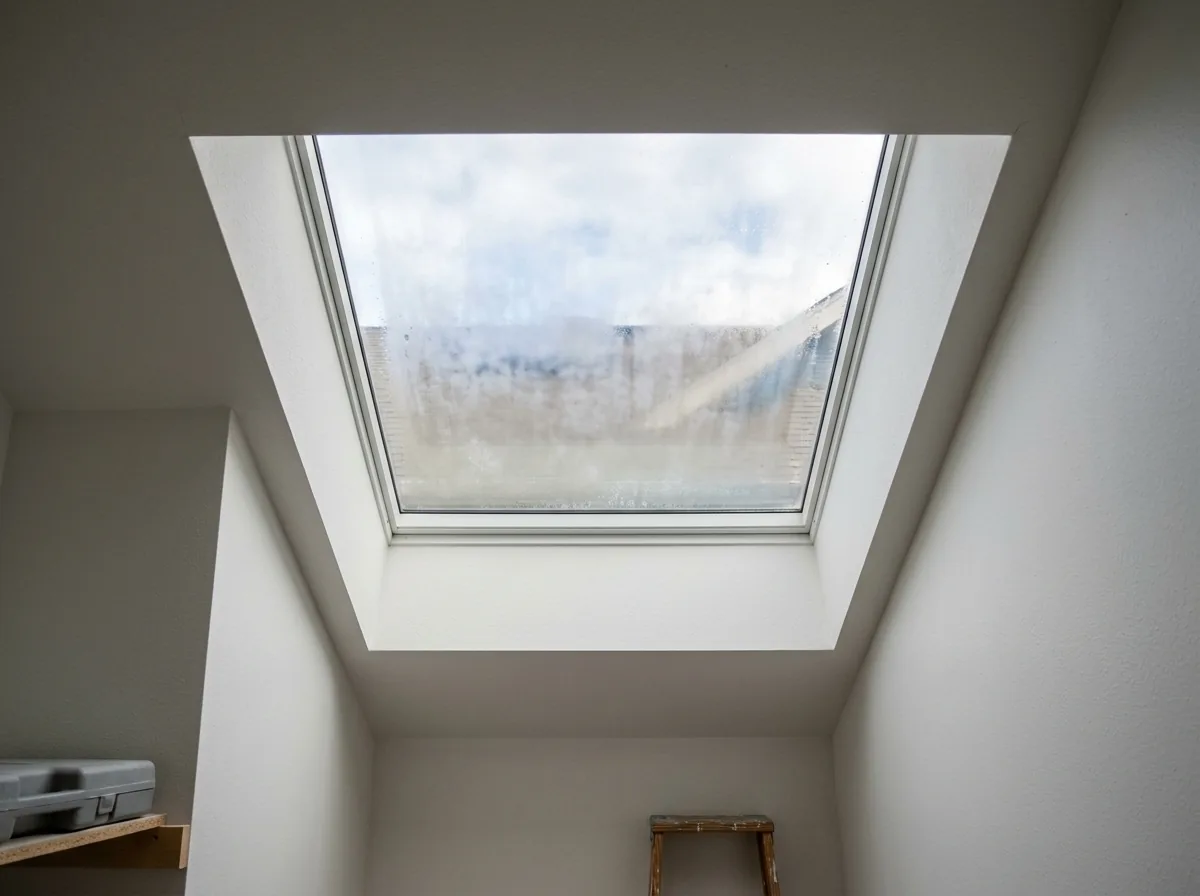
Most glass skylights use sealed insulated units, and they fog for the same reason windows do: the edge seal fails and damp air gets between the panes. HomeGuide prices skylight glass replacement at $150 to $600, but adds that when the installer has to pull the whole skylight to reach the glass, replacing the unit makes more sense. Overhead glass has its own code list. Virginia's residential code limits skylight glazing to laminated glass with a minimum interlayer, heat-strengthened or fully heat-treated safety glass, wired glass, or approved rigid plastics, and some of those need a broken-glass retention screen underneath. A good installer will order replacement glass that meets that list.
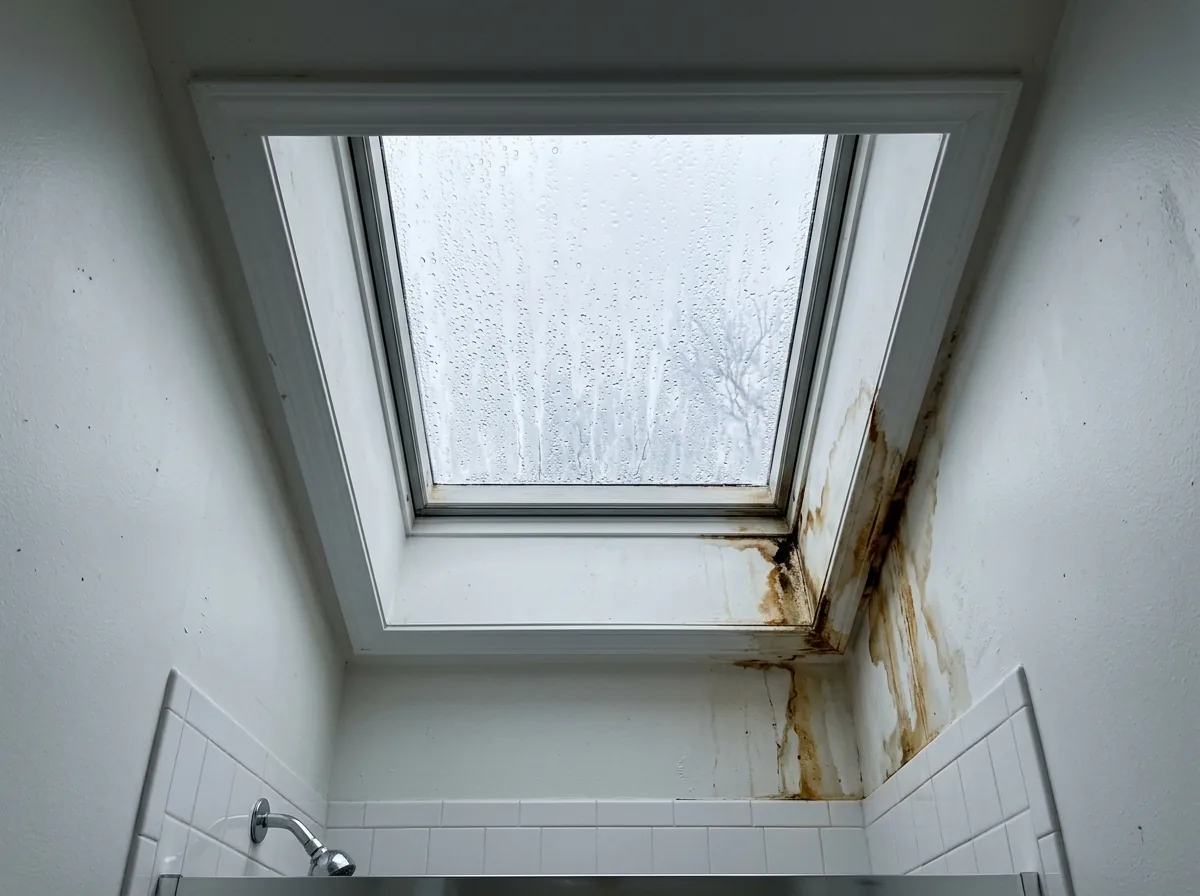
Condensation on the Skylight and Shaft
Condensation forms when the inside surface of the glass is colder than the room air, and the NFRC's consumer guide notes that showers, cooking and dishwashing can add more than a gallon of moisture a day to a home. A skylight is often the coldest surface in a room, and it sits right where warm, damp air rises. January nights here average a low near 29°F, so winter is condensation season. The tell: water that shows up on cold, dry mornings and not during rain. The fixes are an exhaust fan run long enough to clear the bathroom, insulation on the shaft walls, or better-insulated glass, not a roofer. If new glass is the answer, compare the condensation resistance score on each option's NFRC label: it runs from 0 to 100, and higher holds off condensation better.
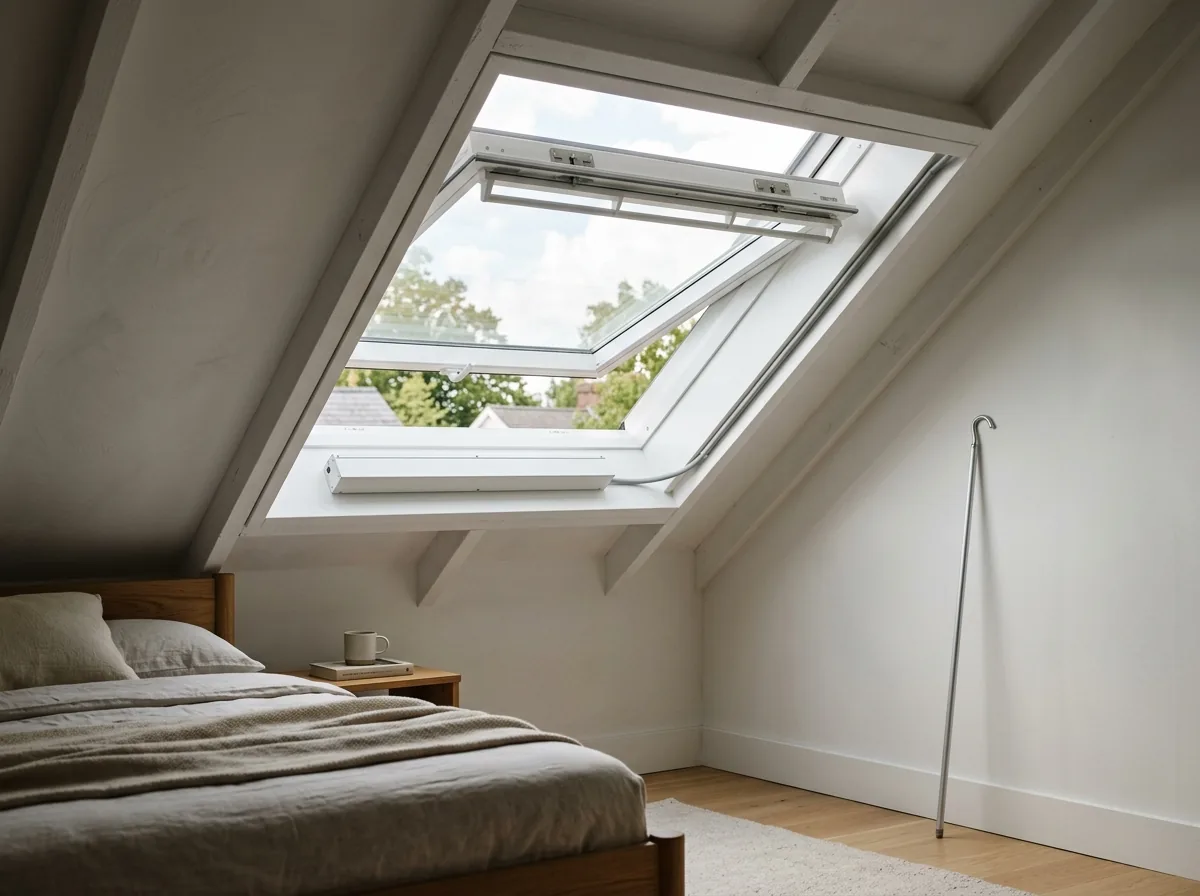
Venting Skylight Motors, Cranks and Sensors
Venting skylights add parts that wear: hand cranks and their poles, electric or solar motors, and on some electric units a rain sensor meant to close the sash when it gets wet. HomeGuide prices a motor replacement at $350 to $700, with solar-powered remote motors the most expensive. A replacement hand crank runs $10 to $70 for the part, and most snap into place. Electrical faults on remote-controlled units may call for an electrician, at $40 to $100 an hour. If a venting skylight won't close on its own, keep it shut by hand until it's fixed. An open sash in a summer storm does far more damage than a dead motor ever will.
Why Richmond homeowners call Richmond Expert Windows
- A single independent window contractor gets your request, never a lead auction
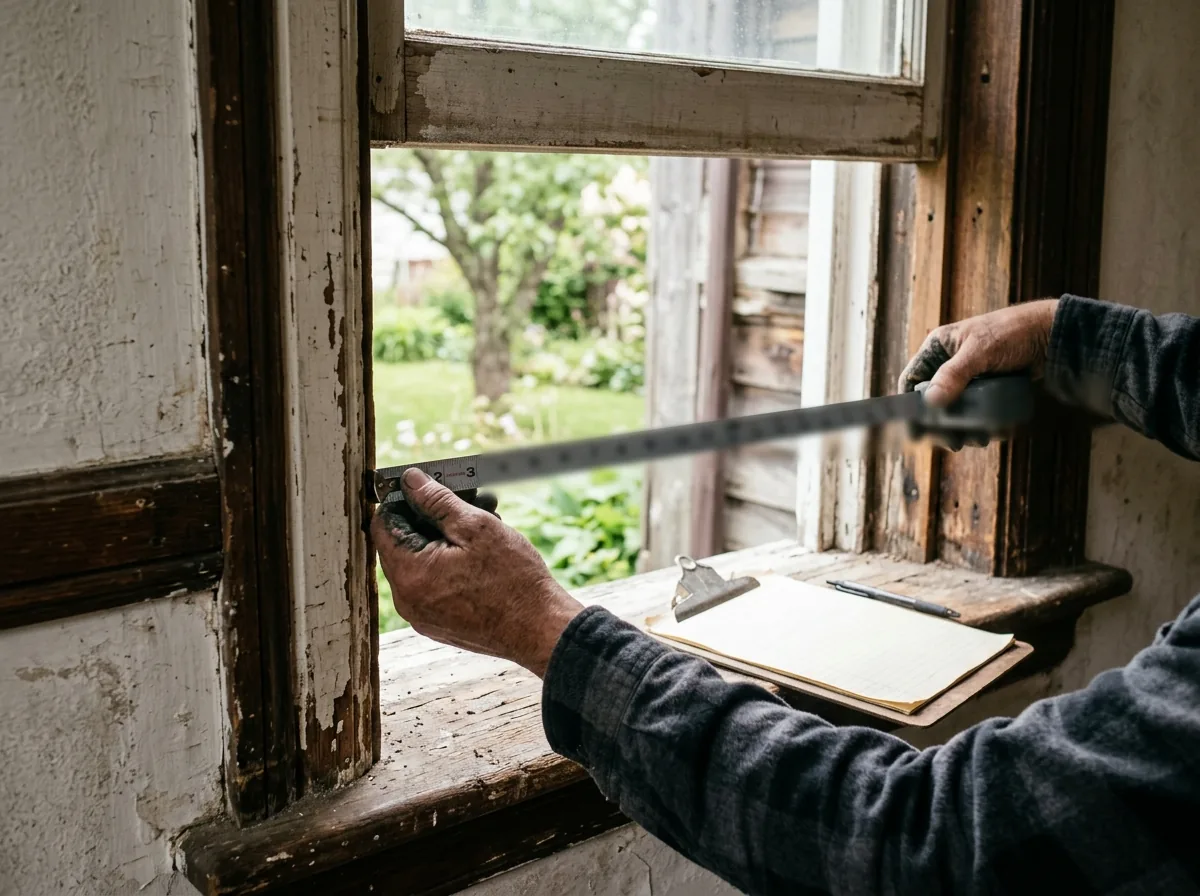
- Every opening is measured on site before a number is put on paper
- Ask for the quote in writing: unit series, glass package, install method
- Homeowners pay nothing for the referral or the visit
Skylight Repair Cost Beyond the Fixes Above
HomeGuide's national guide puts the average skylight repair at $100 to $650. Other lines a Richmond quote may include:
Leak repair, all in
$225 to $800, depending on the method and how much water got in.Resealing
$75 to $250, and weatherstripping $75 to $300.Roof labor
$30 to $80 an hour, with $150 to $300 call-out minimums for roof work.Full skylight replacement
$800 to $2,400.Remove the skylight and roof over the hole
$350 to $1,000.
Ask for the price of interior repairs (stained drywall, shaft paint) as a separate line, since those often come after the leak is stopped.
Repair, Reflash or Replace the Skylight
InterNACHI's life-expectancy table gives skylights 10 to 20 years, three-tab asphalt shingles about 20 and architectural shingles about 30. Those numbers rarely line up, so the question is which wears out first. HomeGuide notes skylight labor costs less during a reroof than as a standalone job. Our rule of thumb:
- 1
Roof young, skylight sound, one leak
Reflash and reseal. - 2
Roof young, skylight old or fogged
Price glass or dome replacement against a new unit, and expect the new unit to win if the frame is tired. - 3
Roof due within a few years
Replace the skylight with the reroof, so new flashing goes in under new shingles once.
For new units, sizes and the code rating a replacement skylight must meet, see Skylights in Richmond, VA.
Skylight Leaks and Richmond Weather
Richmond's normal year includes 8.8 inches of snowfall and a freezing low on roughly 73 nights, on top of summer downpours. Thunderstorm downpours test the flashing; freeze-and-thaw cycles work at any sealant joint. After a heavy storm, check the ceiling around the shaft. Each fall, clear leaves and pine needles from the uphill side of the skylight so the water channel stays open.
See Foggy Window Repair in Richmond, VA for failed seals in wall windows rather than roof glass.