
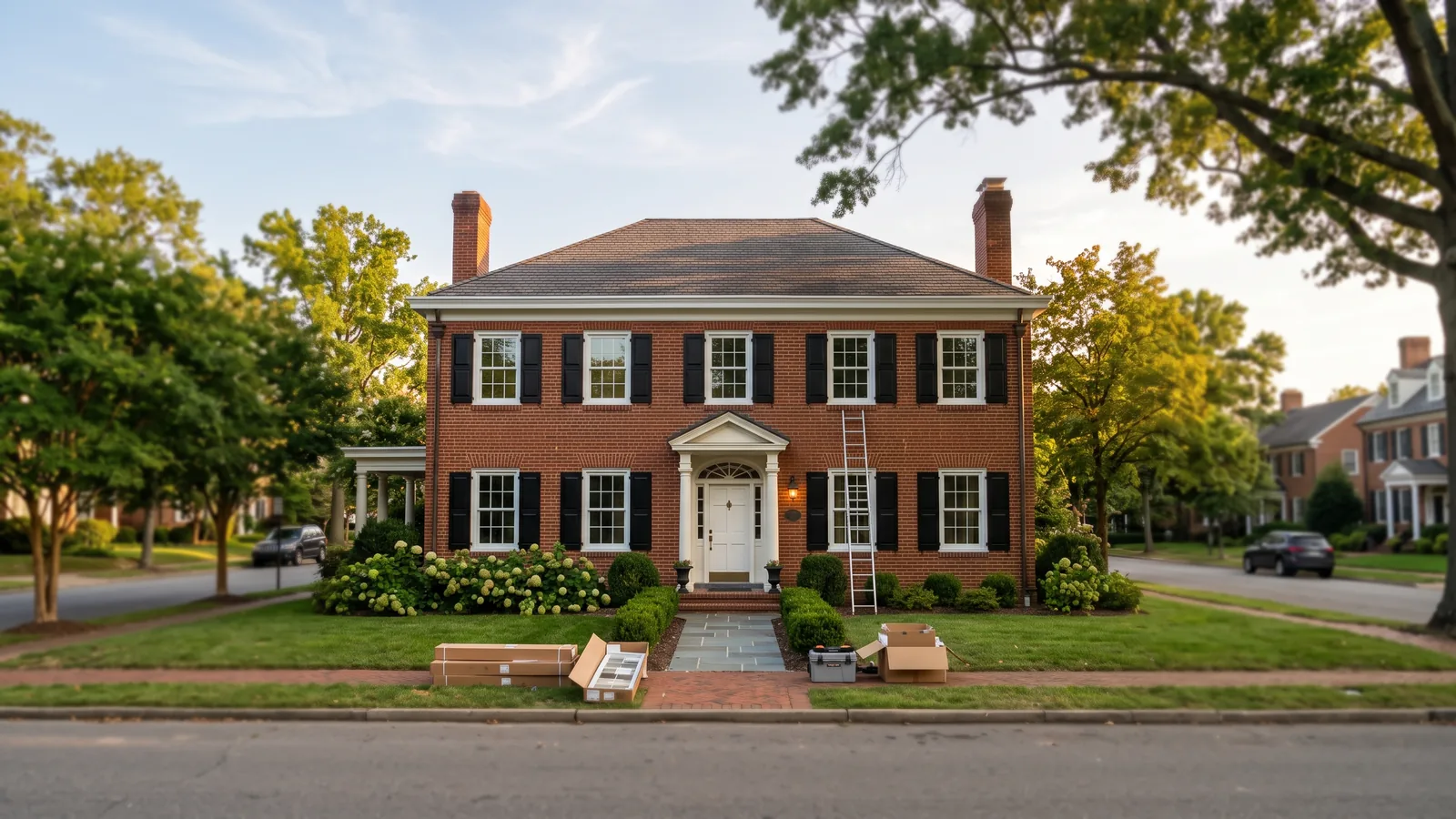
Casement Window Types and Hardware
A casement is a sash on side hinges. What changes from one to the next is how it opens, how wide the opening is, and the hardware that holds it shut.
Single Crank-Out Casements
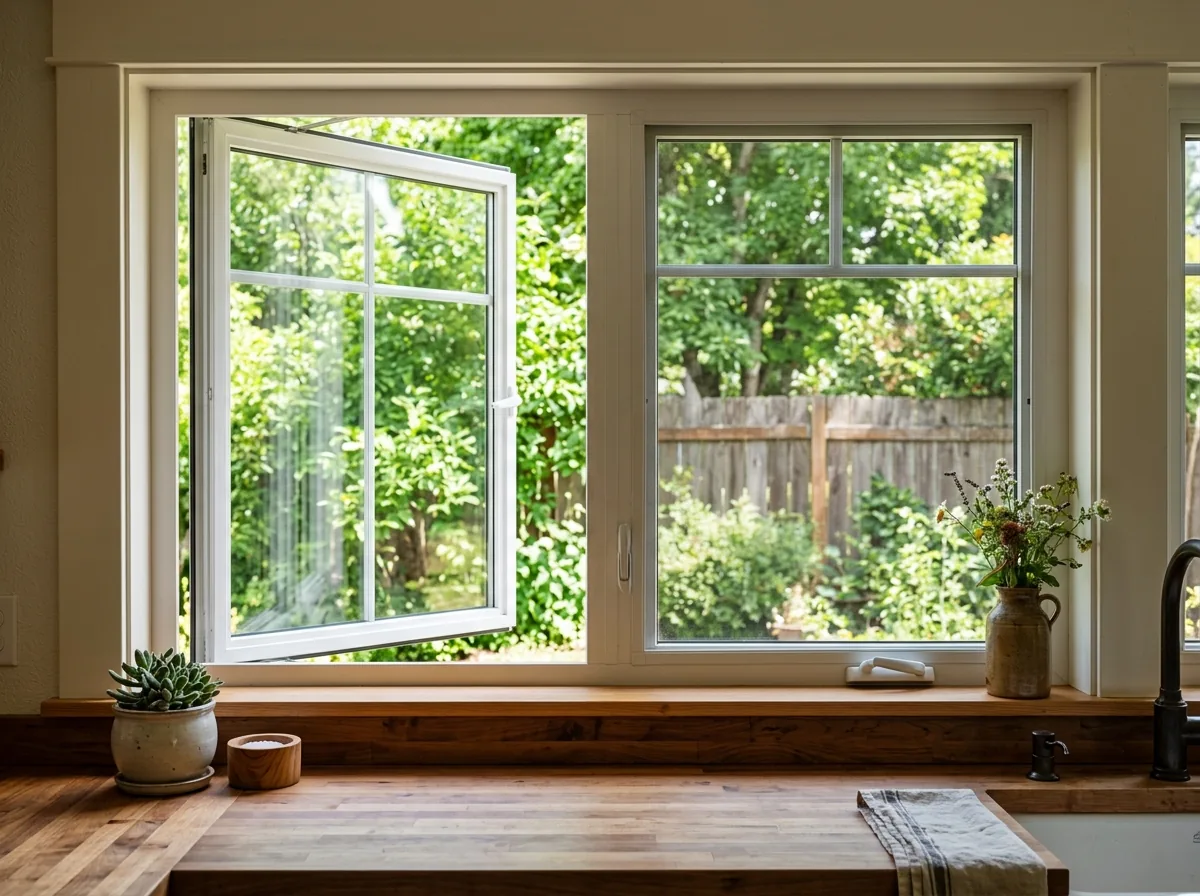
The single casement is the standard: one sash hinged on the left or right, cranked open from a handle on the sill. HomeGuide's national guide puts it at $350 to $550 installed. The open sash acts like a scoop, catching a breeze moving along the wall and turning it into the room, so hinge side matters. On a wall where summer air usually comes from one direction, hinge the sash so it opens into that breeze. Casements stand side by side or flank a picture window in a three-unit row. The crank sits low, so a casement over a sink or deep counter is easier to open than a double-hung you'd have to lean over and lift.
French Casements with No Center Post
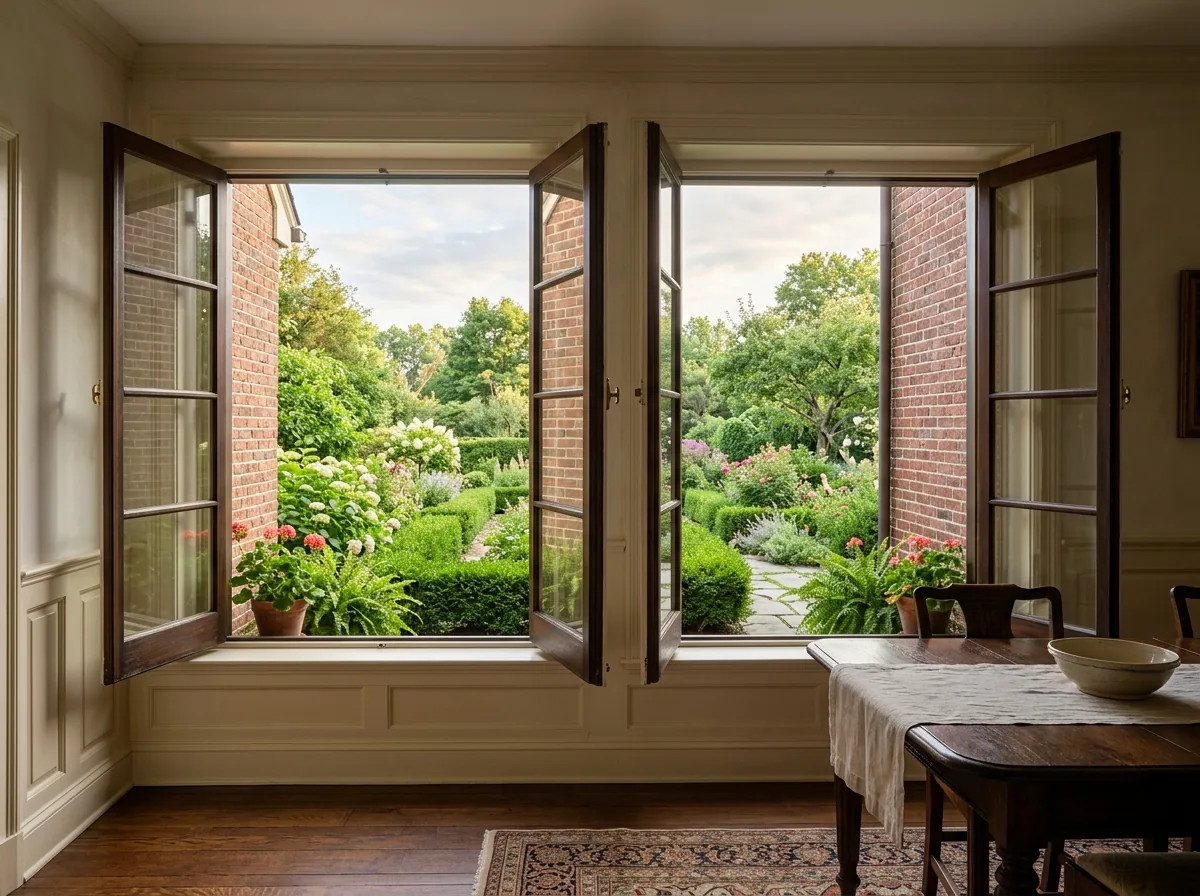
A French casement is two sashes hinged on the outer edges that open from the middle, with no post where they meet. Open, you get one wide, unbroken view, the reason people pick them for a dining room or a spot looking onto a garden. HomeGuide lists the French pair at $725 to $950 installed, nationally. One sash closes first and the other latches against it, so the meeting stiles carry the seal and the lock. Ask to see how the pair seals at the middle and whether both sashes lock top and bottom, since that center line is the one place a French casement can leak.
Push-Out Casements
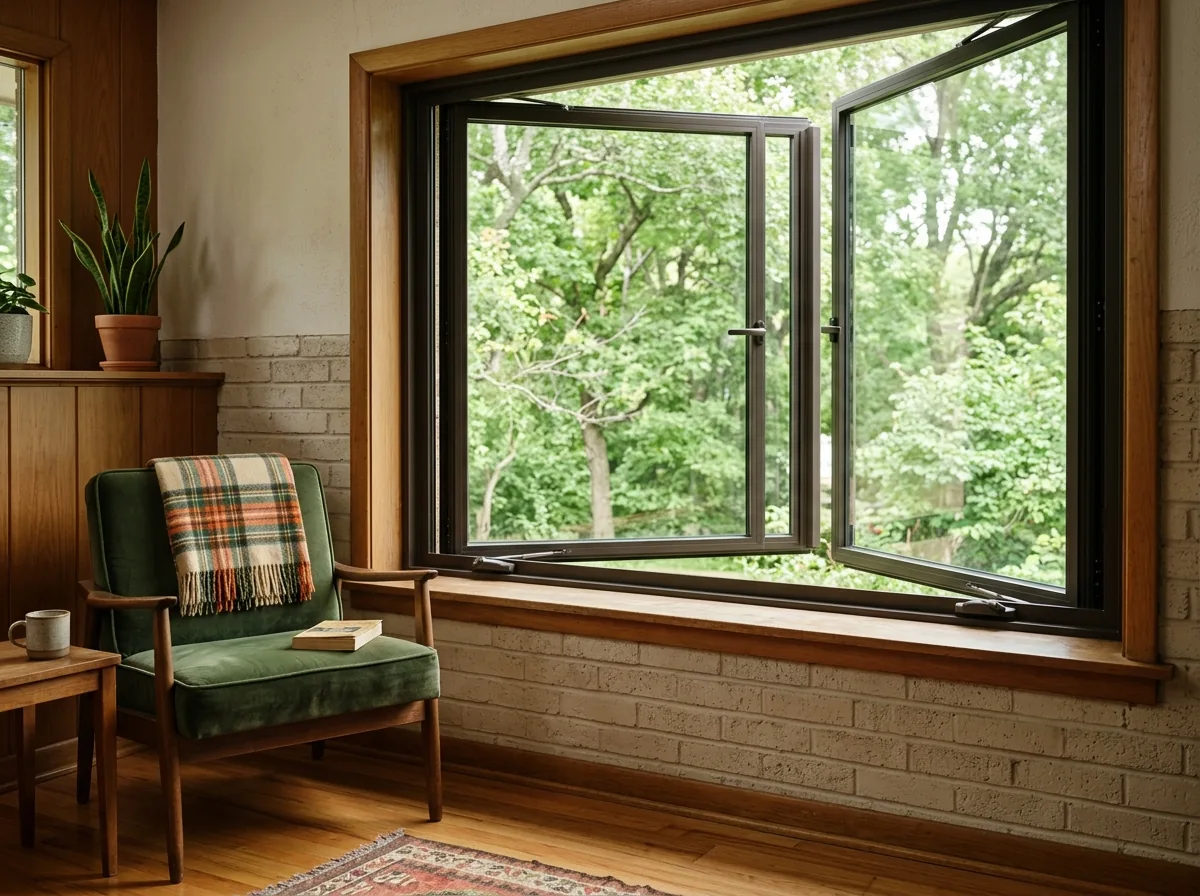
A push-out casement has no crank. You turn a handle and push the sash open, and a friction hinge or limit stay holds it in place. With no crank to snag curtains or wear out, the sill is clean, which suits traditional and modern rooms alike. The trade-off: the screen can't sit on the inside the usual way, since you have to reach the sash to push it, so push-outs use roll-up or hinged screens. Push-outs suit windows you can reach easily. Over a sink or a deep counter, a crank is still the easier reach.
Casements Sized for Bedroom Egress
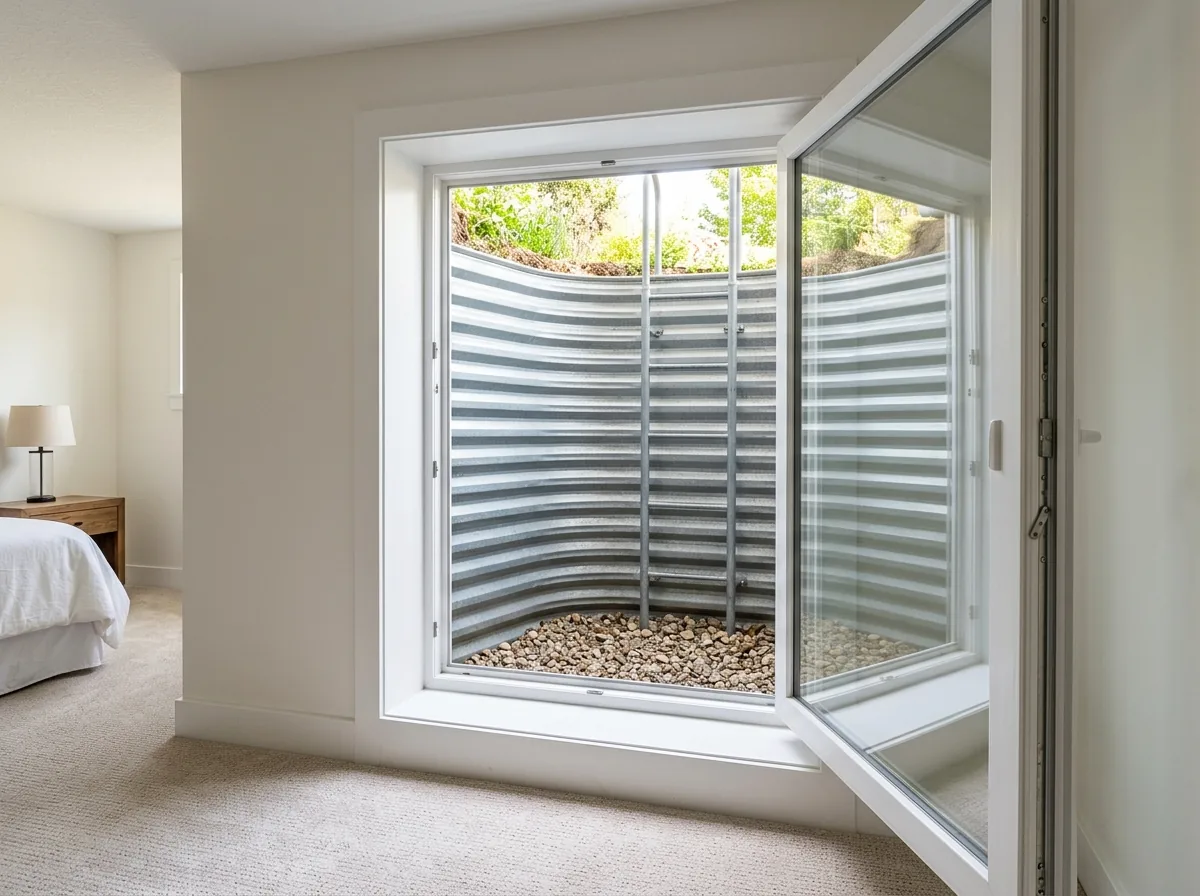
A casement swings fully open, so nearly all of the frame becomes clear opening. For the same rough opening, it clears more than a double-hung or slider, which only opens halfway. So casements are the usual choice for bedroom and basement escape windows. HomeGuide puts an egress casement at $750 to $3,750 nationally, and a below-grade job adds the well and the digging. Size by the clear opening on the maker's spec sheet, not the frame. Our egress windows page gives Virginia's minimum opening, height, width and sill height.
Operators, Folding Handles and Multipoint Locks
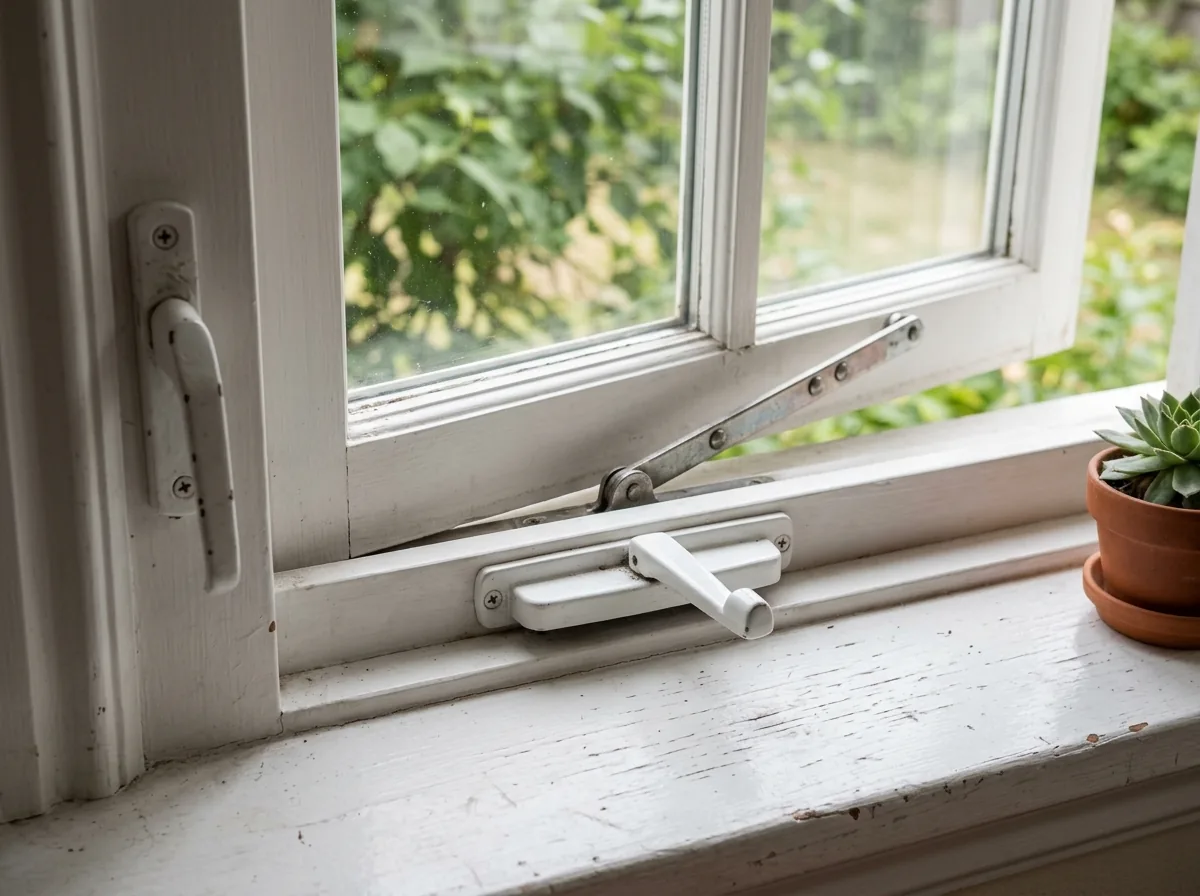
The hardware decides how a casement feels after a few years. The operator is the gear box and arm under the crank; a folding handle tucks flat so blinds clear it. A multipoint lock pulls the sash in at two or more points from a single lever. On a tall casement, that keeps the far corner from bowing away from the seal. Ask about the operator's finish and whether it's sold as a separate part. Our view: that's the piece you're likeliest to replace, so a window whose operator can be swapped without pulling the sash is the better buy.
Why Richmond homeowners call Richmond Expert Windows
- A single independent window contractor gets your request, never a lead auction
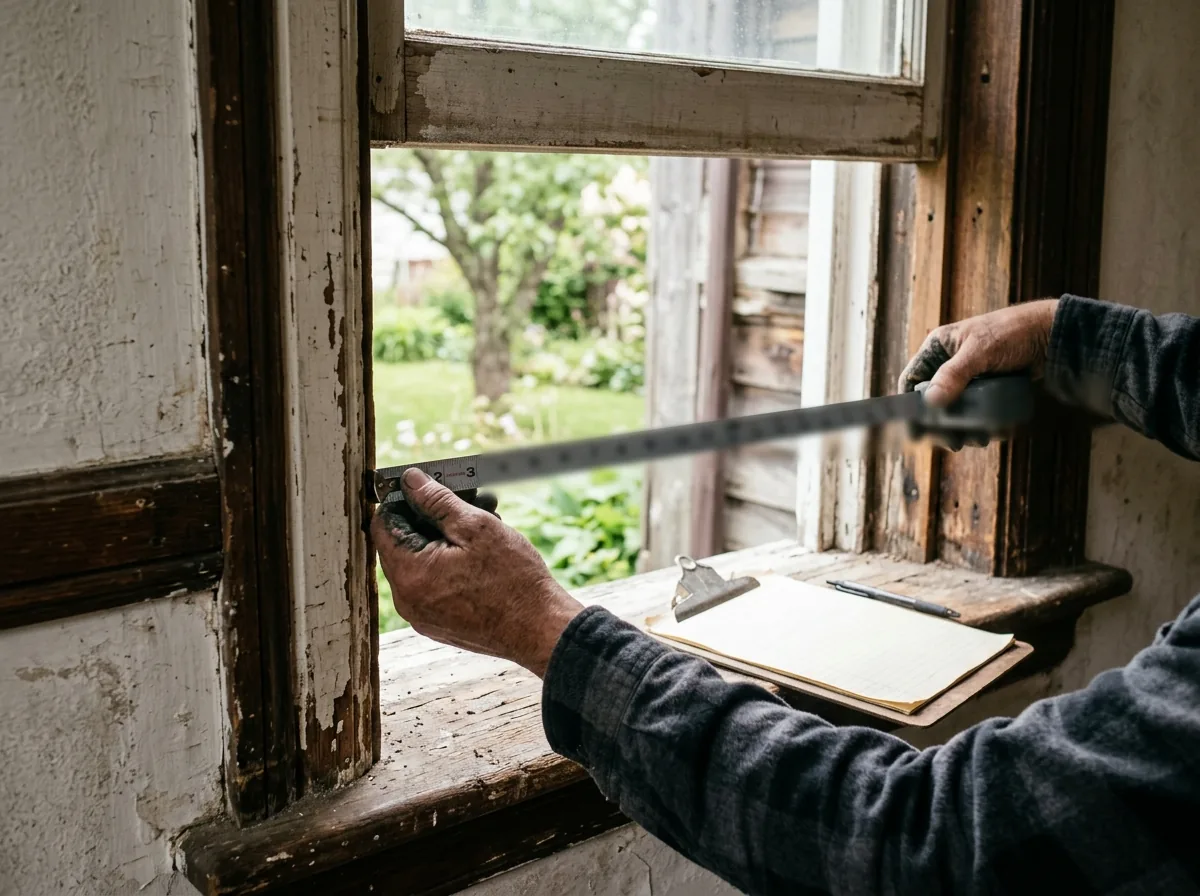
- Every opening is measured on site before a number is put on paper
- Ask for the quote in writing: unit series, glass package, install method
- Homeowners pay nothing for the referral or the visit
Casement Window Cost: National Ranges and What Moves Them
No source publishes a Richmond casement price. HomeGuide's national guides give these installed figures:
Single casement
$350 to $550.French (double) casement
$725 to $950.Picture window with casement flankers
$700 to $1,300.Egress casement
$750 to $3,750.Range across sizes and materials
$400 to $3,000 per casement in HomeGuide's broader window guide.
What pushes a quote up: big sizes that need two installers, wood interiors with clad exteriors, and windows high on a wall, where HomeGuide notes scaffolding adds cost. Labor alone runs $100 to $500 a window nationally. When you compare quotes, check whether each one includes interior casing, exterior trim or capping, and haul-away of the old windows. Also ask each installer to write down the hinge side for every unit, the screen type, and for any bedroom window the clear opening the unit gives when fully open.
Casement Windows for Richmond Homes and Weather
Air leaks
The Department of Energy says casements generally leak less air than hung or sliding windows because the sash presses against the frame to close. Leakage grows as seals wear, so check that weatherstripping can be replaced.Humid summers
Richmond's July dew point averages close to 68°F. In our view, a casement opened into the breeze is the best window for airing out a room on a mild evening before the air conditioning goes on, because the whole sash opens.Screens inside, no storms outside
The sash swings out, so screens mount on the room side. HomeGuide also notes casements don't pair well with storm windows. If you love your exterior storms, keep double-hungs on those openings.Where the sash swings
An open casement sticks out into the yard. Keep it away from decks, porches and walkways, and check that shrubs, railings and downspouts leave it room to open.Upper floors
A casement on a low upstairs sill falls under Virginia's fall protection rules; our double-hung windows page explains them.Glass ratings
The code limits a replacement casement has to meet in Richmond are listed on our energy-efficient windows page.
Casement Installation: How the Job Runs
- 1
Measure and check the swing
The installer measures the opening and checks what the sash will hit outside. - 2
Remove the old window
As an insert, only the old sash and stops come out. As full-frame, the opening is stripped to the framing and checked for rot. - 3
Set, shim and square
The hinge side carries the sash's weight, so solid shimming there keeps the sash from sagging and rubbing the sill. - 4
Flash and seal
Sill pan or flashing, then low-expansion foam and an interior air seal around the frame. - 5
Adjust and test
The installer runs the crank, sets the operator, and checks that every lock point pulls the sash tight against the seal.
See Awning Windows in Richmond, VA for the top-hinged cousin that can stay open in light rain, and Bay and Bow Windows in Richmond, VA for casements used as bay flankers.