
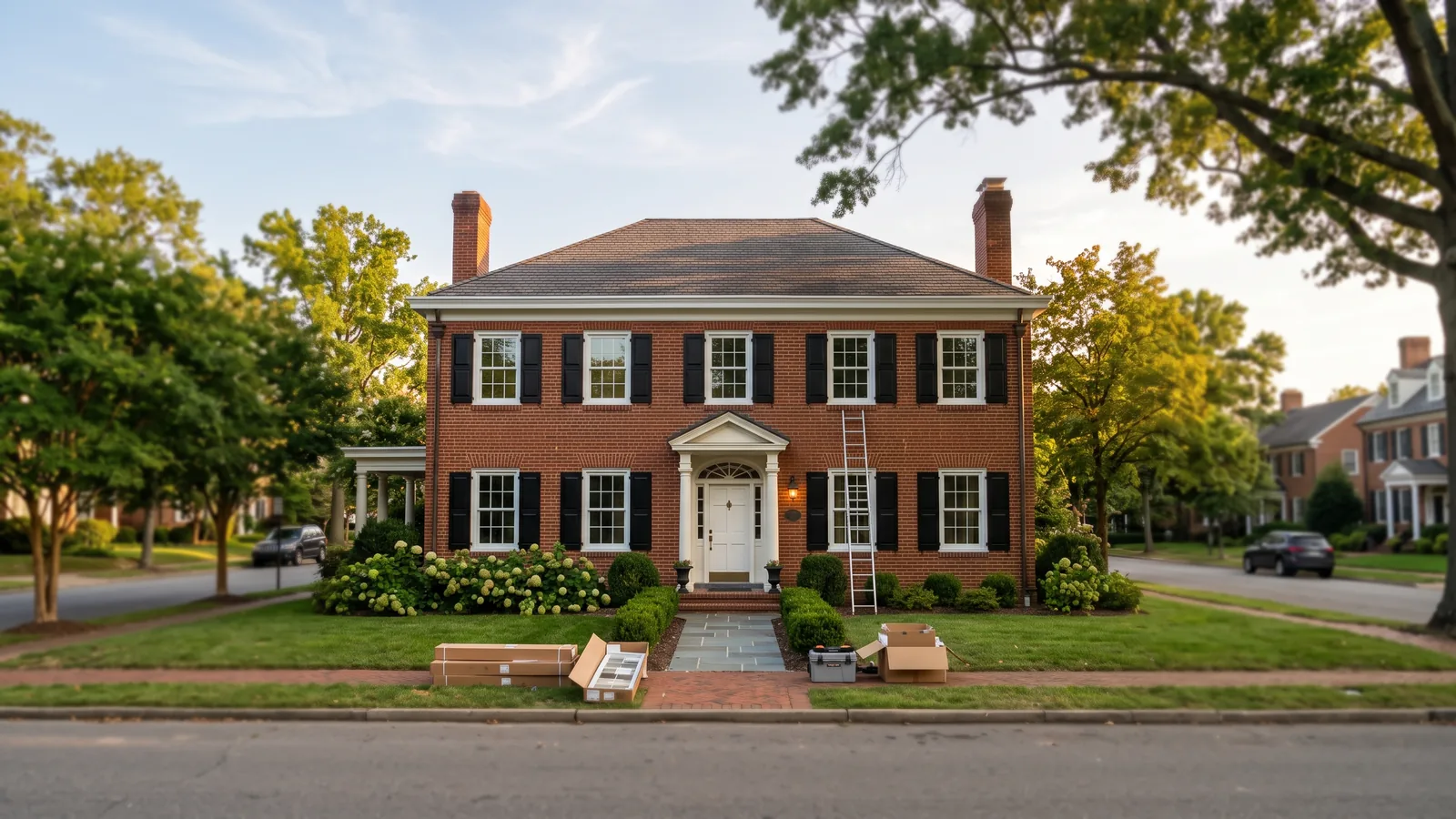
Awning Window Types and Where They Go
Awnings belong where a person can't comfortably reach a sash, or where you want air moving without rain coming in. Most requests fall into one of these five jobs.
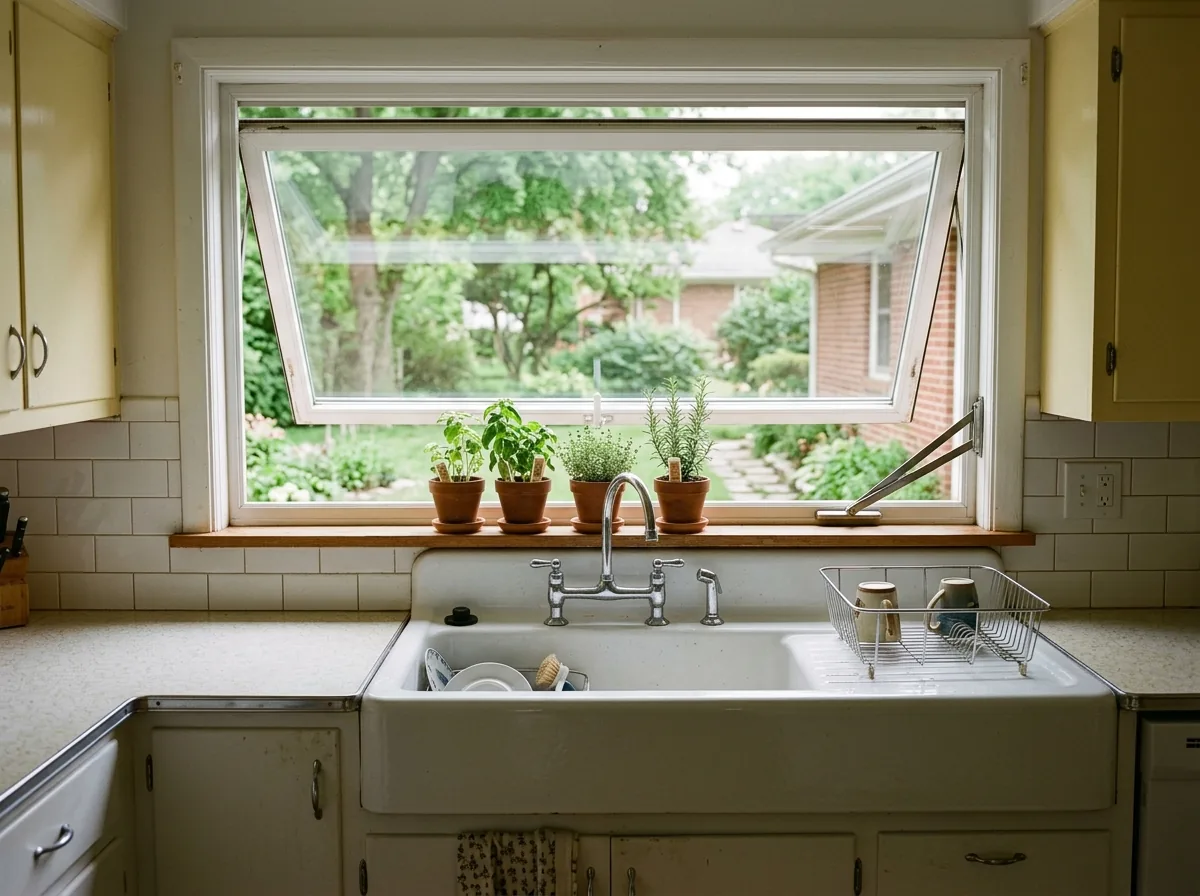
Awnings Over Kitchen Sinks and Counters
Leaning across a sink to lift a double-hung sash is awkward. Turning a crank on the stool isn't. A wide, short awning suits the low opening a backsplash leaves, and when it's open the sash tips out like a small roof over the gap, so a sudden shower doesn't land on the counter. Ask whether the operator handle folds flat. A handle that sticks up catches dish towels and gets knocked by a tall faucet, and on a deep sink it's the only part of the window you touch.
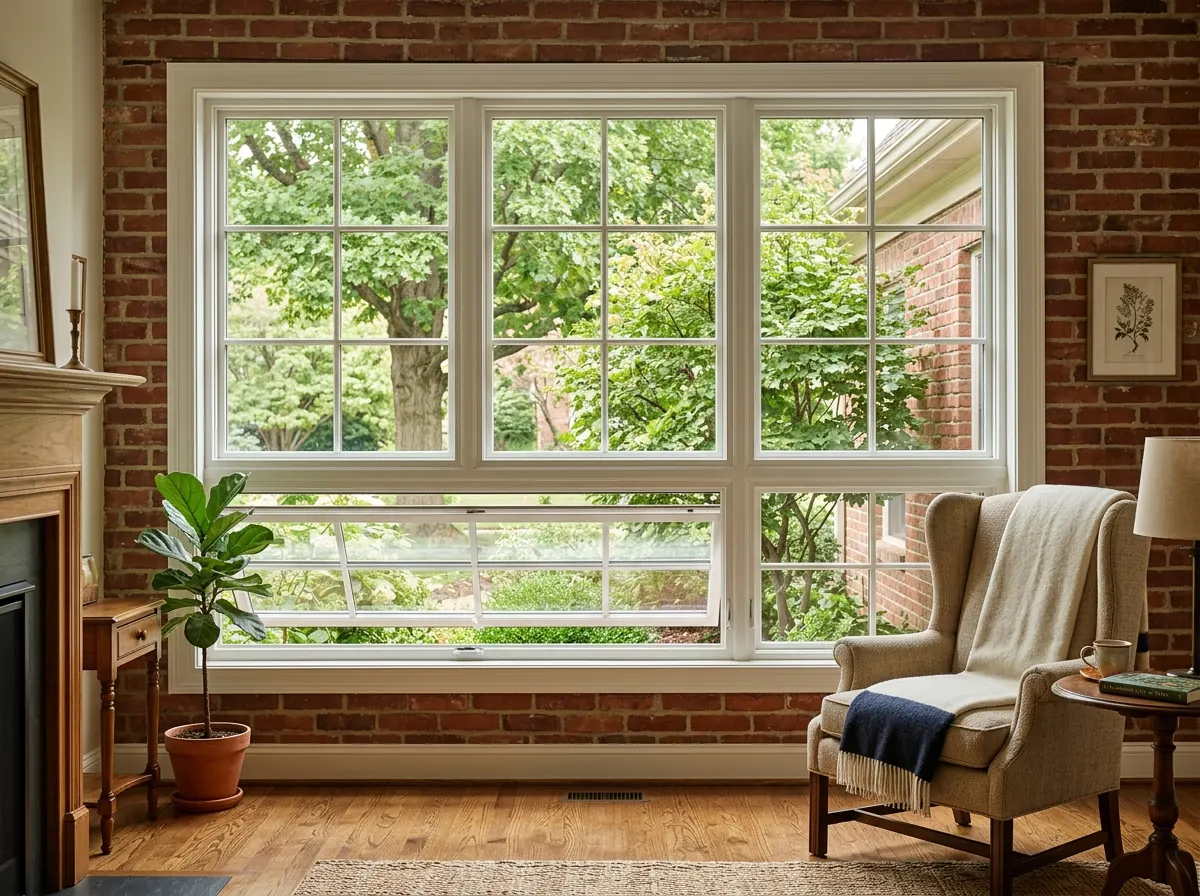
Stacked Awnings With a Picture Window
HomeGuide notes that contractors often set an awning below a large picture window for ventilation. The pairing gives a living room one big unbroken pane with a vent strip under it, or over it as a transom-style vent. The two units are joined with a mull, either at the factory or on site, and that joint needs the same care with flashing as the head of the window. In our view the vent belongs on the bottom: you can reach it without a step stool, and a low vent pulls in cooler air.
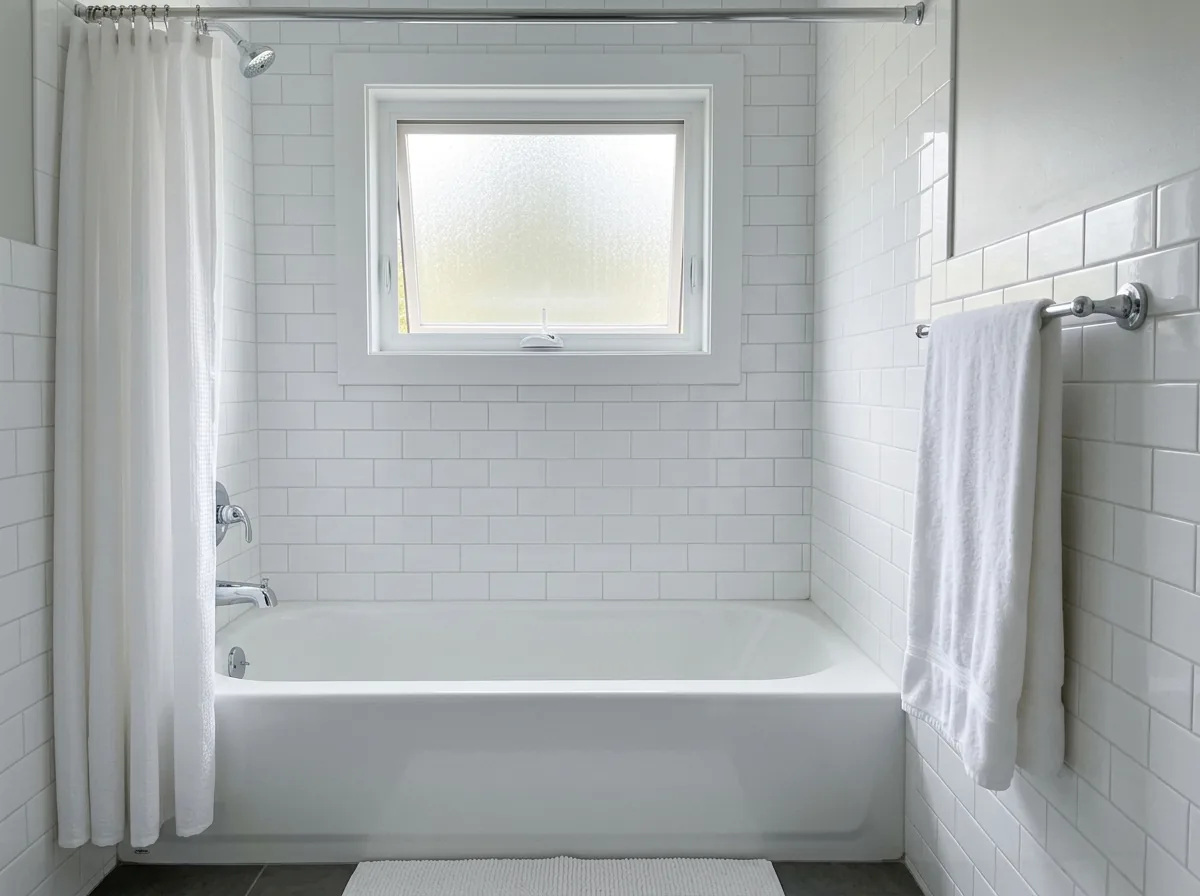
Bathroom and Shower Awnings With Obscure Glass
High on a bathroom wall, an awning lets steam out and keeps the view in. Obscure glass, in frosted, rain or reed patterns, gives privacy without a blind that mildews. A window inside a shower or close to a tub can fall under the safety glazing rules set out on our sliding glass doors page, so ask the installer to measure from the tub edge before the glass is ordered. Vinyl and fiberglass frames tolerate shower steam better than a bare wood sill does.
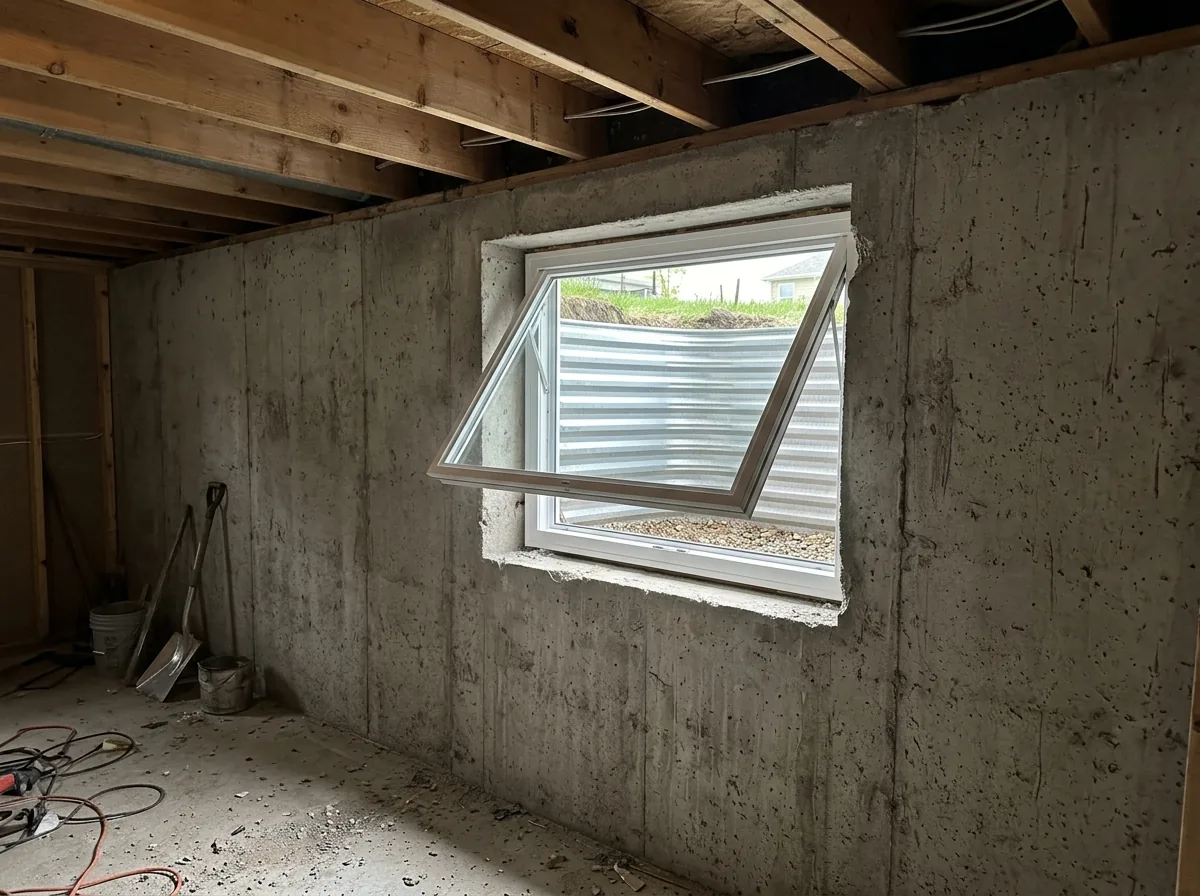
Basement Awnings and Hoppers
In a foundation wall the question is where the sash goes when it opens. An awning swings out, so it needs a well deep enough, or grade low enough, for the bottom rail to clear. In return it keeps rain off the sill and leaves the inside of the opening free for a shelf or a dryer vent run. Where that outside room isn't there, the inward-tipping hopper is the alternative. Our basement windows page goes further into hoppers, glass block and rusted steel frames.
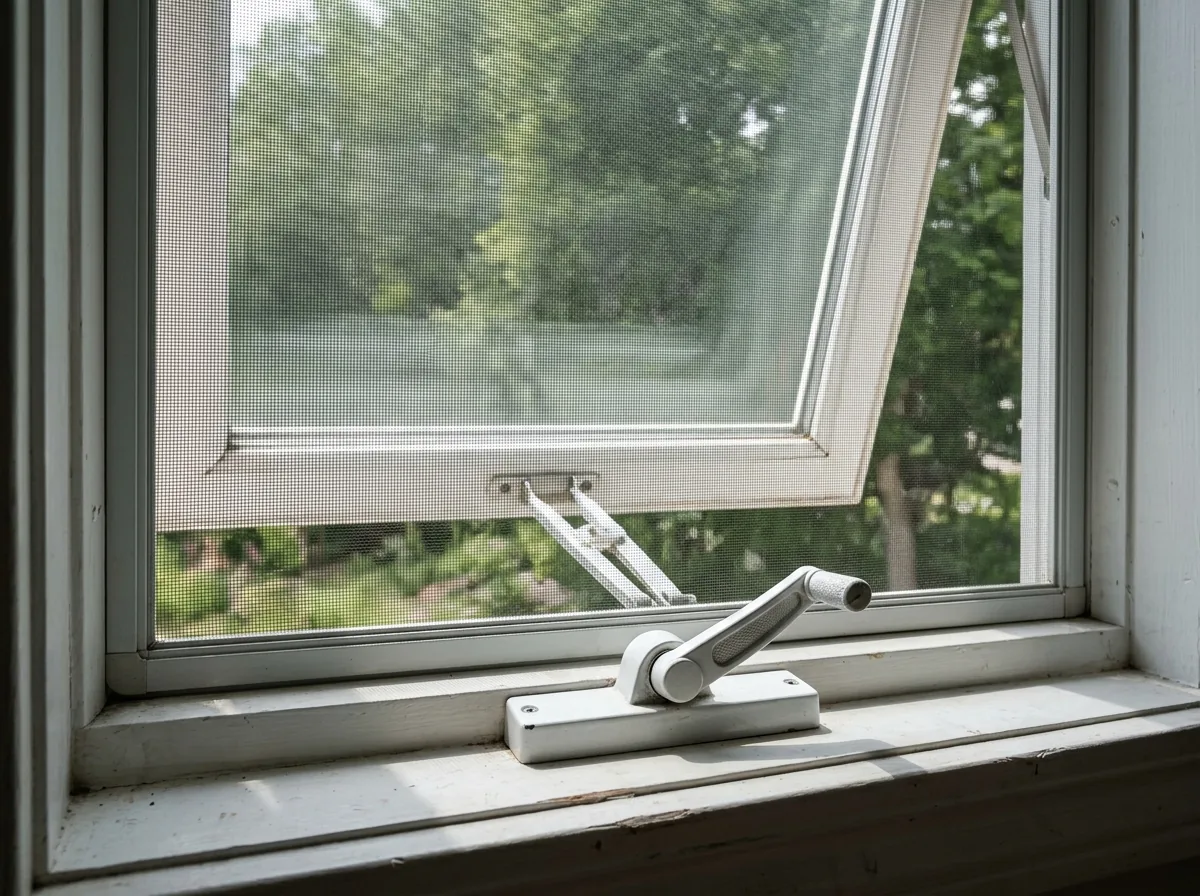
Awning Operators and Interior Screens
Hardware decides how an awning wears. Most use a scissor or dual-arm crank operator; small units sometimes use a push-out bar with a limiter. Since the sash swings outward, the screen sits on the inside, so you can pull it for cleaning without a ladder. Ask how the screen comes out and whether replacement operators are a stock part. A stripped crank is the repair awnings need most often.
Why Richmond homeowners call Richmond Expert Windows
- A single independent window contractor gets your request, never a lead auction
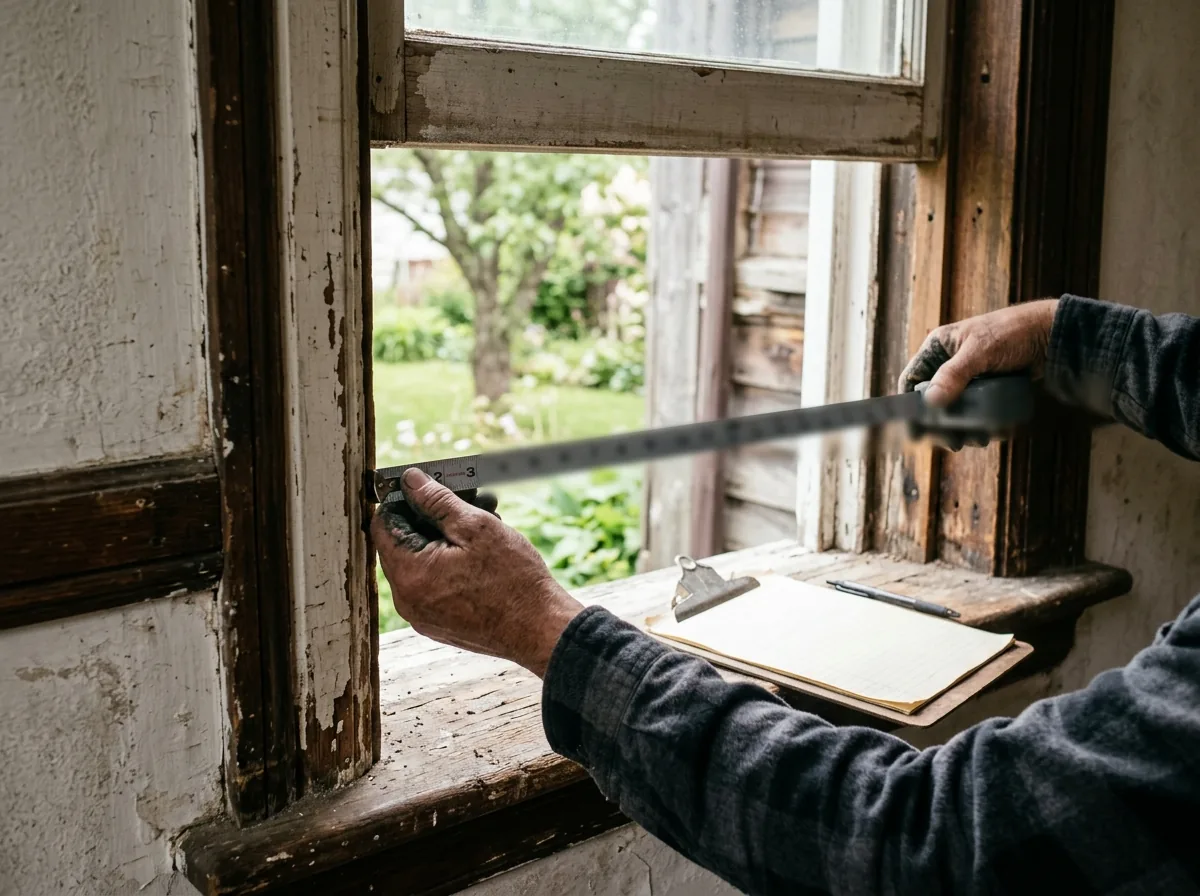
- Every opening is measured on site before a number is put on paper
- Ask for the quote in writing: unit series, glass package, install method
- Homeowners pay nothing for the referral or the visit
Awning Window Cost: National Ranges and Price Drivers
No published source gives a Richmond-only price. HomeGuide's national figures put an awning at $400 to $2,000 per window installed, with the unit alone at $300 to $1,600. The same guide lists casements at $400 to $3,000 and sliders at $300 to $2,300 installed. On those figures an awning sits close to a casement, which fits: the hinge hardware and seal are much alike.
What moves the number:
Size and proportion
A wide, short unit over a counter costs more than a small bathroom vent.Mulling
Pairing an awning with a picture window adds the mull joint and its flashing.Glass
Obscure, tempered or laminated glass costs more than clear low-E.Frame material
Vinyl is usually the cheapest; fiberglass and clad wood cost more. The vinyl windows page compares frames.The opening
An awning cut into a block or poured basement wall, or one going in over a rotted kitchen sill, takes more labor than a clean insert.
Awning Windows and Richmond Weather
Richmond averages about 45.5 inches of precipitation a year, and July's mean dew point at the airport is close to 68°F. Damp summers are where awnings pay off. Tilted out, the sash sheds water away from the opening, so a kitchen or bath vent can stay cracked through a passing shower. Close it when the rain is wind-driven.
On air leakage, the Department of Energy groups awnings with casements and hoppers: the sash closes by pressing against the frame, so they generally leak less air than sliding or hung windows. In a house that runs air conditioning for much of the summer, the tighter seal helps.
An awning has two limits. In our view an awning is a poor choice for a bedroom escape window, because the arms and the outward-tilted sash eat into the clear opening; the sizes a bedroom needs are on our egress windows page, and a casement, which swings fully clear, is the usual alternative. On an upper floor with a low sill, fall-protection rules can apply, covered on the double-hung windows page.
Awning Window Quote: What to Ask For
Operator type
Crank, folding crank or push bar, and whether parts are stock.Opening limiter
A sash that swings over a deck or walkway should have one, so nobody walks into the corner.Glass package
Clear or obscure, plus the U-factor and SHGC from the label. The energy-efficient windows page explains both numbers.Screen
Interior screen included, the mesh type, and how it comes out.Install method
Insert or full-frame, a sill pan, head flashing and exterior capping.Mull and trim
For stacked units, who builds the mull and how the joint is sealed.
See Casement Windows in Richmond, VA when you want the same crank-and-seal hardware on a side-hinged sash that opens wider.
See Basement Windows in Richmond, VA for below-grade openings, window wells and glass block.